


Free written scope consultation - allowances, timeline, and change-order rules on paper before a single trade is scheduled
Therma-Tru Home Additions & ADU: The Los Angeles Owner’s Guide
Adding a room or building an ADU off the back of a home with Therma-Tru doors and millwork means the new framing, headers, and exterior openings have to match the existing product lines cleanly, and in Los Angeles that work runs $53,100 to $153,400 depending on square footage, foundation type, and how much of the existing roofline we’re tying into. Most owners call us at the point where a patio door or exterior door from Therma-Tru is either being moved, reframed, or replaced as part of the addition, and they want to know the opening will be sized and flashed correctly so the new Therma-Tru unit doesn’t bind or leak six months after the addition is closed in. We carry and install the Therma-Tru-compatible trim, thresholds, and door slabs in-house, and a Penhallow technician can usually be on site in Los Angeles within one business day to measure and price the full opening.
Here’s the honest picture: a Therma-Tru home addition or ADU almost never fails all at once. What usually happens is the door in the existing wall starts dragging or the threshold feels soft, and once we open it up, the rough opening wasn’t prepped for the span of the new beam or the added weight of a second story. By the time the homeowner notices, the door is the symptom, not the problem. Our job is to fix both in the same visit.
Which Therma-Tru Models This Applies To
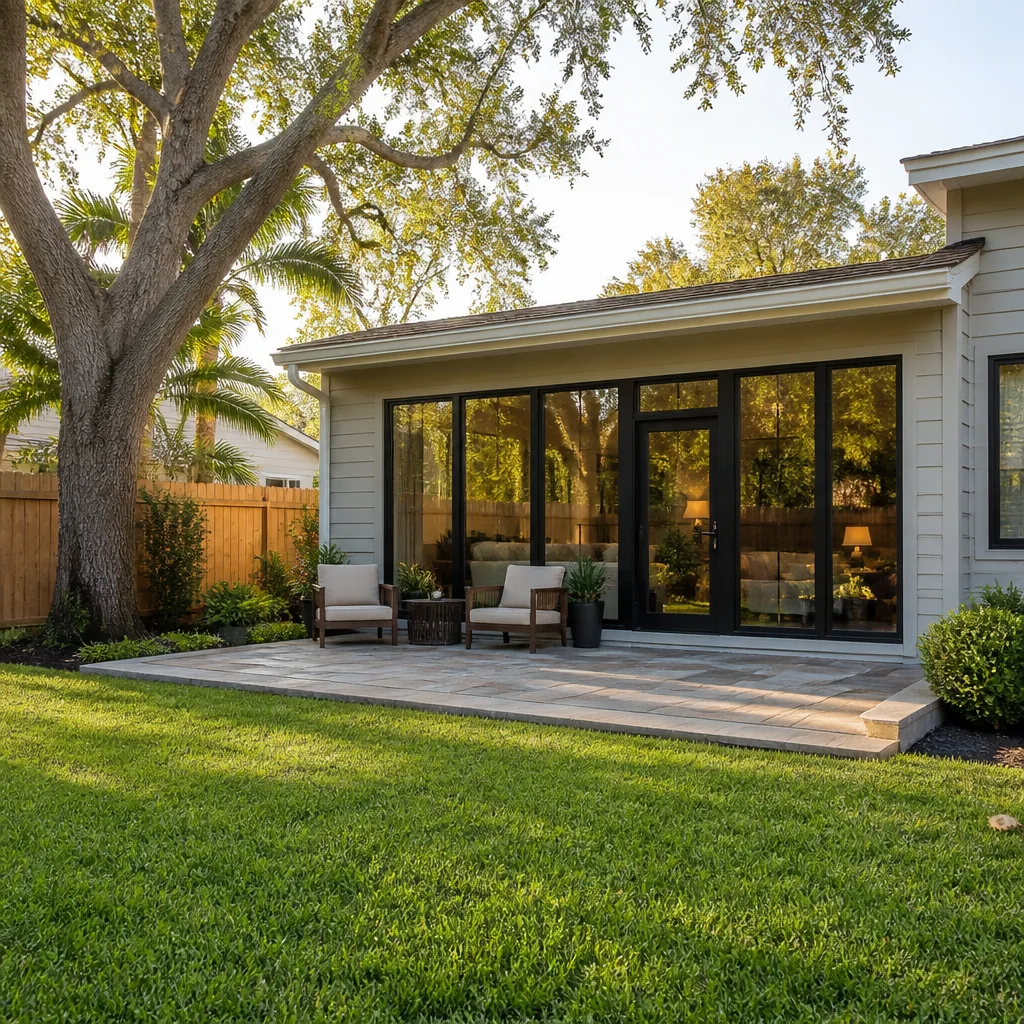
Penhallow Remodeling is an independent contractor in Los Angeles, not a factory affiliate of Therma-Tru, but we order and install across their current exterior door families: the Classic-Craft, Fiber-Classic, and Smooth-Star lines, plus the Benchmark door systems that come prehung. When a homeowner adds a room or builds an ADU, the compatibility question is less about the door slab and more about the rough opening, the sill pan, and the water management around the new opening. A Classic-Craft door, for instance, uses a high-density fiberglass skin that does not swell like wood when the new stucco or siding hasn’t fully cured, which is a common Los Angeles issue when a new ADU wall is still drying out. The benchmark system matters because it is a preassembled unit with its own sill and frame, and if the rough opening is off by even half an inch on the hinge side, the door will never seat correctly.
The fastest way to identify what you have is to look at the hinge edge of the door slab itself. Therma-Tru stamps the model, the glass package, and the manufacturing date into the top rail on most of their fiberglass doors. If the stamp is worn or painted over, we can match it from the dimensions of the slab, the hinge placement, and the brickmold profile. For a Benchtop or entry system going into a new ADU, we usually spec the door the other way around: we measure the rough opening first, then order the Therma-Tru unit that fits it, rather than cutting the opening to a door that was bought off the shelf.
OEM versus aftermarket is a real decision here. Therma-Tru’s factory hinges, weatherstripping, and sills are engineered for their specific slab weights and swing arcs, and we default to OEM for anything that moves or seals. For trim, brickmold, and interior casing, a quality aftermarket profile from a Los Angeles mill shop is fine and often costs less. The exception is the bottom sweep on any Fiber-Classic or Benchmark unit: we only use the Therma-Tru factory sweep because the mounting kerf is cut to a proprietary width.
Styles & brands we work with







Signs Your Therma-Tru Home Addition or ADU Opening Is Failing
- Door drags or sticks only during certain months. Los Angeles soil expands and contracts with seasonal moisture, and a new addition’s foundation or a mudsill that wasn’t anchor-bolted correctly will shift the rough opening. When a Therma-Tru slab with a tight 1/16-inch reveal starts dragging, it’s the frame moving behind it, not the door sagging.
- Water shows up at the interior floor after rain. This is almost always a sill pan missing under the door or a piece of flashing that terminates behind the stucco instead of over it. Fiberglass won’t rot like wood, but the subfloor behind it will, and by the time you see the streak, you’ve already lost sheathing.
- Threshold feels spongy underfoot. The aluminum-sill Therma-Tru units sit on a bed of sealant and a stiffener. If someone installed the door over an opening in the rim joist without blocking underneath, the sill flexes, the sweep loses contact, and the door starts failing its air and water seal.
- New drywall cracks radiating from the door corner. When an ADU is added and a headed opening is cut through what was once a shear wall, the beam above the door has to be sized and strapped properly. Hairline cracks at the two top corners of a newly installed Therma-Tru unit mean load is being transferred through the door frame instead of the header.
- The door opens itself or won’t stay latched. If the latch doesn’t click into the strike plate solidly, the frame has racked. We see this on ADUs and additions in areas like the Westside and the San Fernando Valley where backyard footprints drop toward a slope, and the foundation starts to creep.
See the difference
 Before
 After
After Before
 After
After Before
 After
AfterReplacement Cost & What’s Included
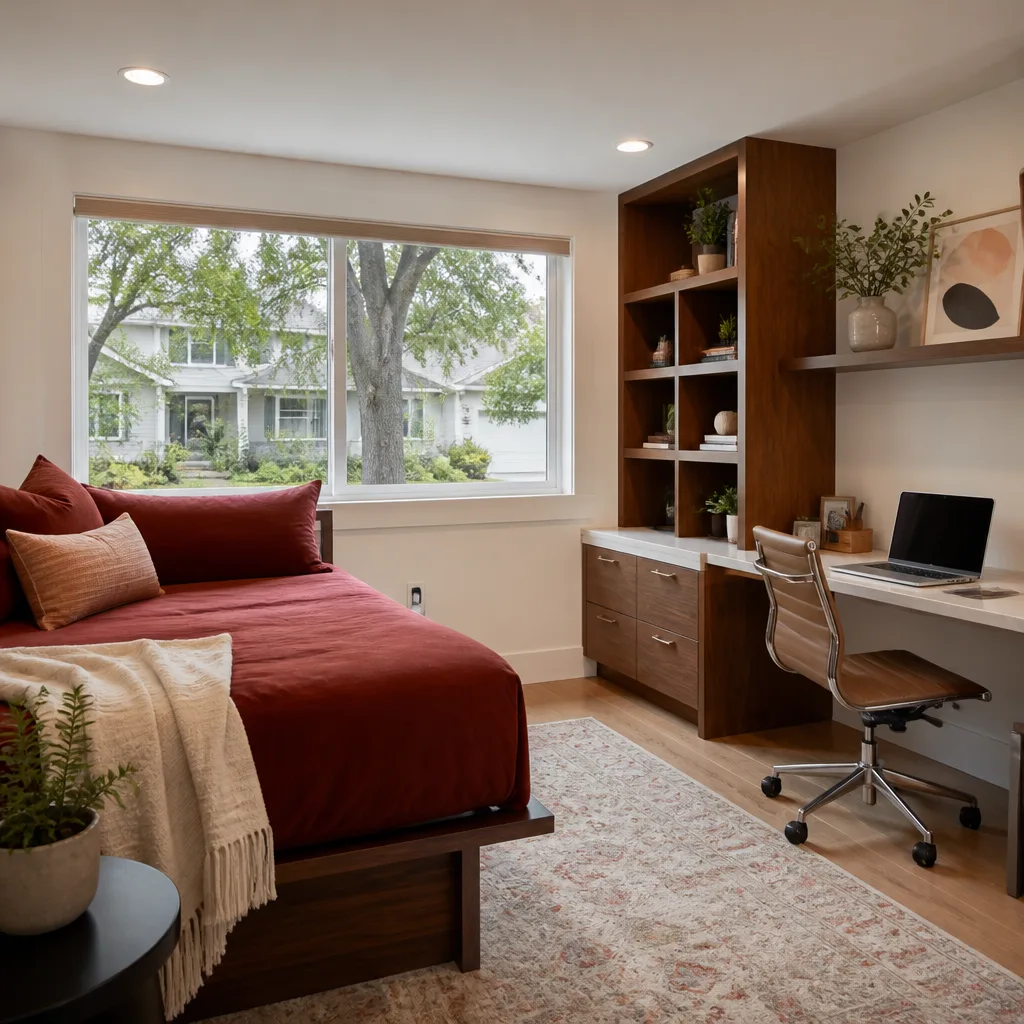
For a Therma-Tru home addition or ADU project in Los Angeles where the door opening is part of a larger remodel, the full scope runs $53,100 to $153,400 depending on the size of the addition, whether it’s a ground-up ADU or a bump-out, and the level of interior finish you choose. Within that, a Therma-Tru exterior door system itself, including the slab, prehung frame, sill pan, flashing, and labor, typically runs $2,360 to $7,670 when it’s part of a bigger opening package. If a header has to be engineered because a new ADU door is wider than the original rough opening, that adds structural work on top.
We write the price before we start, and the number on day one is the number on the invoice. That price includes removal of the old door and frame if needed, any framing correction to the rough opening, installation of the new Therma-Tru unit, exterior flashing and sealing, interior casing, and haul-away. Every Penhallow job includes the 365-Day Done Right Promise in writing: if the door binds, the threshold fails, or the flashing leaks inside a year, we come back and fix it at no charge. No service call fee, no re-inspection fee.
DIY or Call Us?
You can check three things yourself. First, open the door halfway and let go: if it drifts open or closed on its own, the hinges are binding, which is often a sign the frame is moving. Second, run your hand along the bottom sweep and look for daylight: a compressed or torn sweep means the door isn’t sealing. Third, look at the gap between the slab edge and the frame on the latch side: it should be an even 1/16 to 1/8 inch top to bottom. An uneven gap means the rough opening has shifted.
What you should not do is attempt to reframe the opening or shim a Therma-Tru unit yourself. The door is load-bearing to its frame, and the frame carries the weight of whatever sits above it, including the header, the trimmer studs, and in the case of a two-story addition, a second floor. If the shims aren’t placed behind the hinges and the strike plate exactly, the fiberglass slab will warp, the frame will bow, and the door will fail its seal. That’s the short version. The long version involves a guy with a 6-foot level who does this every week. Give you a number first, then pick up the tools. Call (213) 277-6578 and we’ll measure it and write the price before anything gets pulled.
FAQs
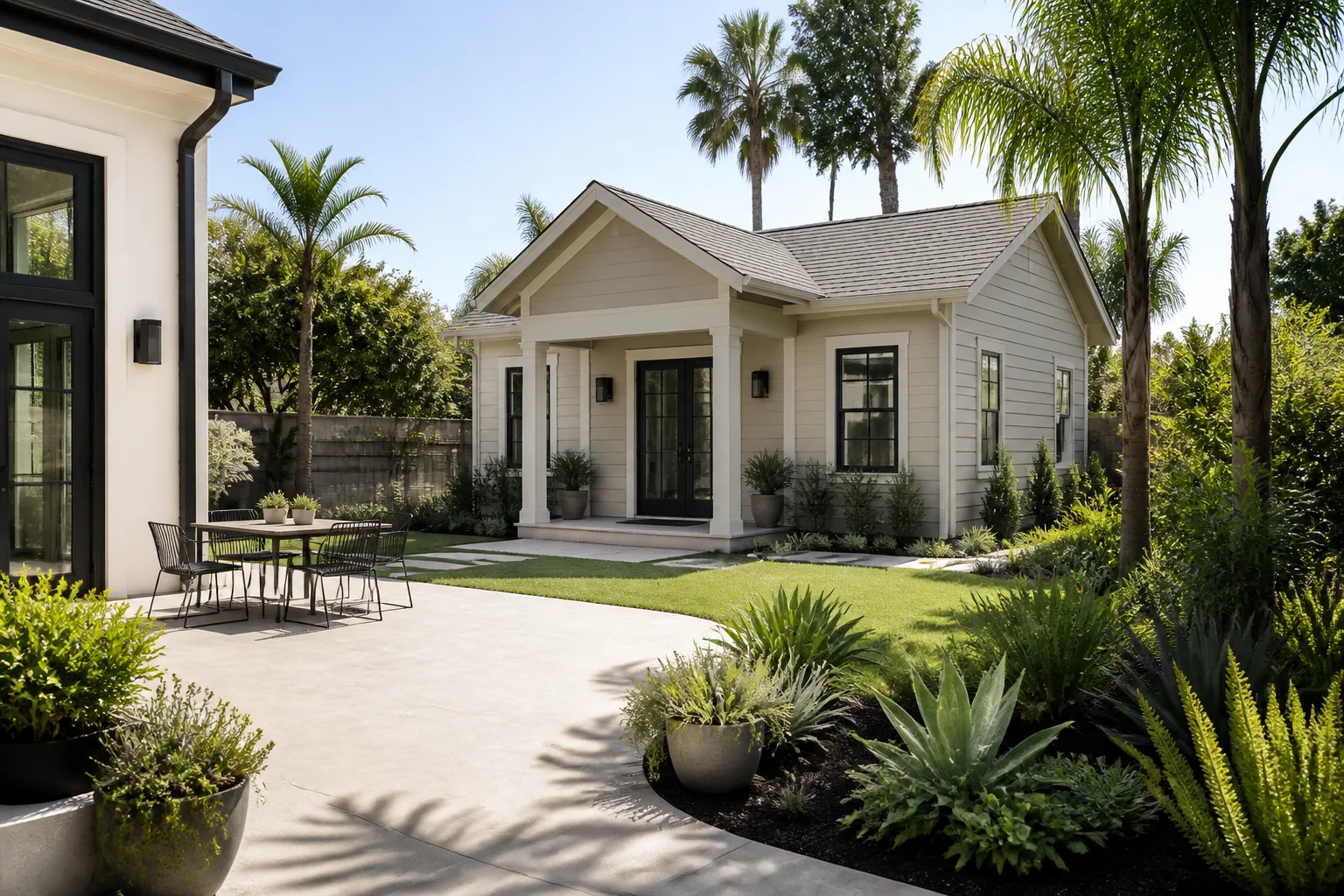
A properly installed Therma-Tru fiberglass door system should last 25 to 35 years on a Los Angeles home, but the outdoor exposure matters more than the door itself. On a west-facing ADU wall in the Valley that takes full afternoon sun and no shade, the factory finish will break down faster and the weatherstripping will harden sooner. The slab itself won’t fail, but the seals will need replacing every 7 to 10 years. Call (213) 277-6578 for a free estimate on any Therma-Tru opening, new or existing.
In most cases yes. If the slab is sound, we can rehang it with new shims, replace the sweep and weatherseal, reset the threshold, and correct the sill flashing without pulling the whole unit. If the frame itself has moisture damage or the corner joints have opened, replacement is the better call. We’ll tell you which one applies after we open it up, and the price will be in writing before we do anything.
For a single Therma-Tru entry or patio door as part of an addition or ADU, the swap usually takes one day from removal to sealed, with a second short visit if painters are finishing the interior casing. If the rough opening needs to be reframed, plan for two days plus any required Los Angeles Department of Building and Safety inspections. We pull the permits, and the inspection is included in our price.
Our Los Angeles trucks carry common Therma-Tru sweeps, hinge shims, strike plates, sill caps, and weatherstripping for the Classic-Craft, Fiber-Classic, and Smooth-Star lines. If you have a less common glass package or a custom-width slab, we order directly from the Therma-Tru catalog and the part arrives in three to five business days. We’ll measure the opening before ordering so the unit is right the first time.
Written by Trevor Nash, Owner, Penhallow Remodeling Los Angeles at Penhallow Remodeling Los Angeles, serving Los Angeles and nearby areas.


