



Free written scope consultation - allowances, timeline, and change-order rules on paper before a single trade is scheduled
Plant Prefab Kitchen Remodeling: The Los Angeles Owner’s Guide
If you own a Plant Prefab home in Los Angeles and the kitchen is starting to show its age, we can help. A full Plant Prefab kitchen remodel in Los Angeles typically runs $16,520 – $53,100 installed, depending on cabinet line, countertop material, and whether walls or plumbing move. Most owners call us after the flat-pack cabinetry begins to delaminate at the seams or the factory countertops show water damage around the sink cutout.
Plant Prefab kitchens are built around modular dimensions, which means the parts don’t always swap out the way they would in a stick-built house. Trevor Nash has pulled enough Plant Prefab cabinet boxes apart to know exactly what you’re dealing with, and our crews work on these homes across Los Angeles regularly. The good news: a failing Plant Prefab kitchen doesn’t mean a gut job. In many cases, we replace the components that are failing and leave the modular shell alone.
Which Plant Prefab Models This Applies To
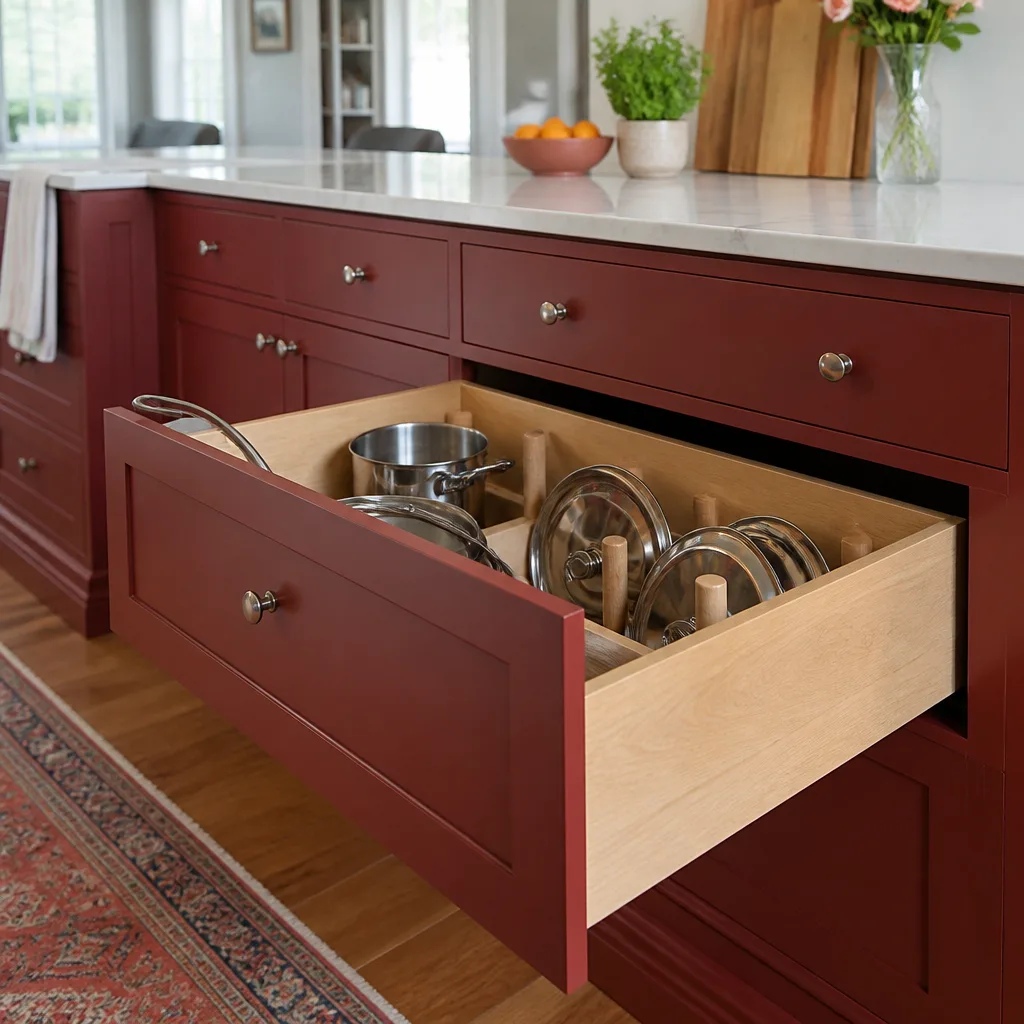
We work on kitchens across the Plant Prefab line, including the LivingHome series, ADU models, and custom modular builds that came out of the Rialto factory. One thing that surprises Los Angeles owners: even within the same Plant Prefab model year, cabinet dimensions can vary by a half-inch, because the factory adjusted tolerances between production runs. That half-inch matters when a replacement cabinet box has to fit into a modular wall cavity.
Before we quote anything, we measure. We’re looking for the module seams, the exact cabinet box dimensions, and whether the factory used standard 32mm European hinge boring or something custom. If you still have the original spec sheet from Plant Prefab, that helps. If you don’t, we work from what’s in front of us. For replacement cabinetry, we typically spec KraftMaid or Wellborn because they offer enough size flexibility to match Plant Prefab’s modular openings without leaving gaps. Cambria and Silestone quartz are our standard countertop options when the factory laminate or solid-surface top has failed.
Styles & brands we work with







Signs Your Plant Prefab Kitchen Remodeling Is Failing
- Delaminating cabinet edges and drawer fronts. Plant Prefab shipped many kitchens with thermally-fused laminate doors. Los Angeles humidity swings, especially in coastal neighborhoods like Mar Vista or Playa del Rey, cause the edge banding to peel. Once moisture gets behind the laminate, the panel swells and won’t come back. The fix is door and drawer front replacement, not glue.
- Water damage around the sink cutout. We see this constantly in Plant Prefab kitchens. The factory used laminate or thin solid-surface countertops, and if the sink seal failed even slightly, water wicked into the substrate. That dark ring around the sink means the top has to go. We replace it with quartz, which does not absorb water, period.
- Sagging shelves and cabinet bottoms. Plant Prefab built for speed and shipping weight, so the shelving material is often thinner than what you’d get in a custom kitchen. After ten years of canned goods, the shelves bow. In Sherman Oaks or Encino kitchens, we’ve measured over 3/8 inch of sag on a 30-inch shelf. We replace with thicker plywood and add a front edge for rigidity.
- Drawer slides that stick or fall off their track. The factory hardware was often specified at the minimum. Los Angeles dust is fine and gritty, and it chews through cheap ball-bearing slides fast. If a drawer grinds, skips, or drops, the slide is shot. We replace with full-extension soft-close slides rated for much higher cycles.
- Failing hinges and misaligned doors. Plant Prefab doors were installed and adjusted at the factory, then the modules bounced down the 10 freeway to your lot. Hinges loosen, doors drift, and you end up with gaps. Sometimes it’s an adjustment. Most of the time, if the hinges have been wrenched back and forth, they’re done.
See the difference
 Before
 After
After Before
 After
After Before
 After
AfterReplacement Cost & What’s Included
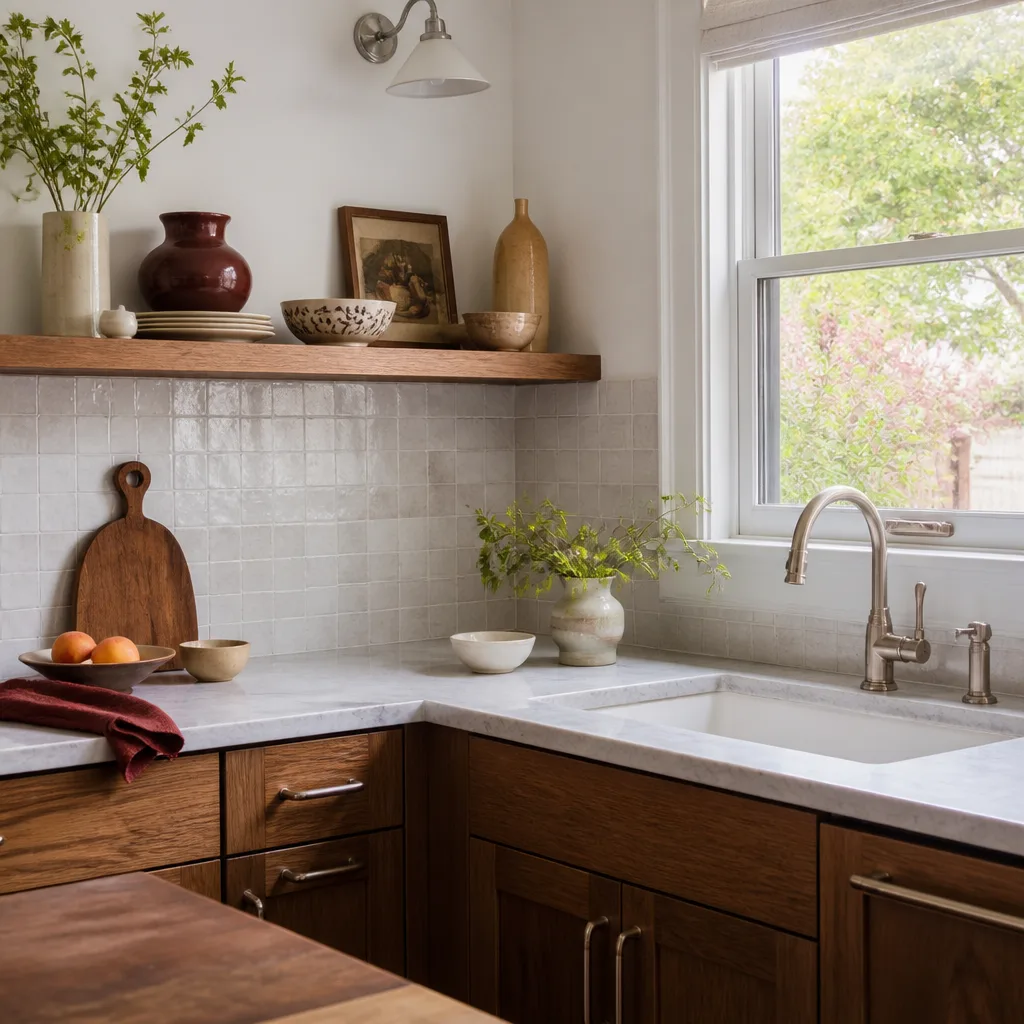
A Plant Prefab kitchen remodel in Los Angeles runs $16,520 – $53,100, and here is what moves the number. A cabinet-only refresh with new doors, drawer fronts, and hardware sits at the lower end, around $10,620 – $23,600. Swapping countertops to Cambria or Silestone quartz adds $2,360 – $7,670 depending on square footage and edge profile. A full kitchen reconfiguration, where we move the sink, add an island, or open the kitchen to the living module, pushes you to the top of the range, because we’re rerouting plumbing and electrical inside the modular floor and wall cavities.
Every quote includes a written line-item price before any work starts. You’ll see parts, labor, and materials separated. No change orders unless you ask for more work, and the number on the invoice matches the number on the quote. Every Plant Prefab kitchen remodel we do in Los Angeles carries the 365-Day Done Right Promise in writing, including a free return visit if anything fails within the guarantee period.
DIY or Call Us?
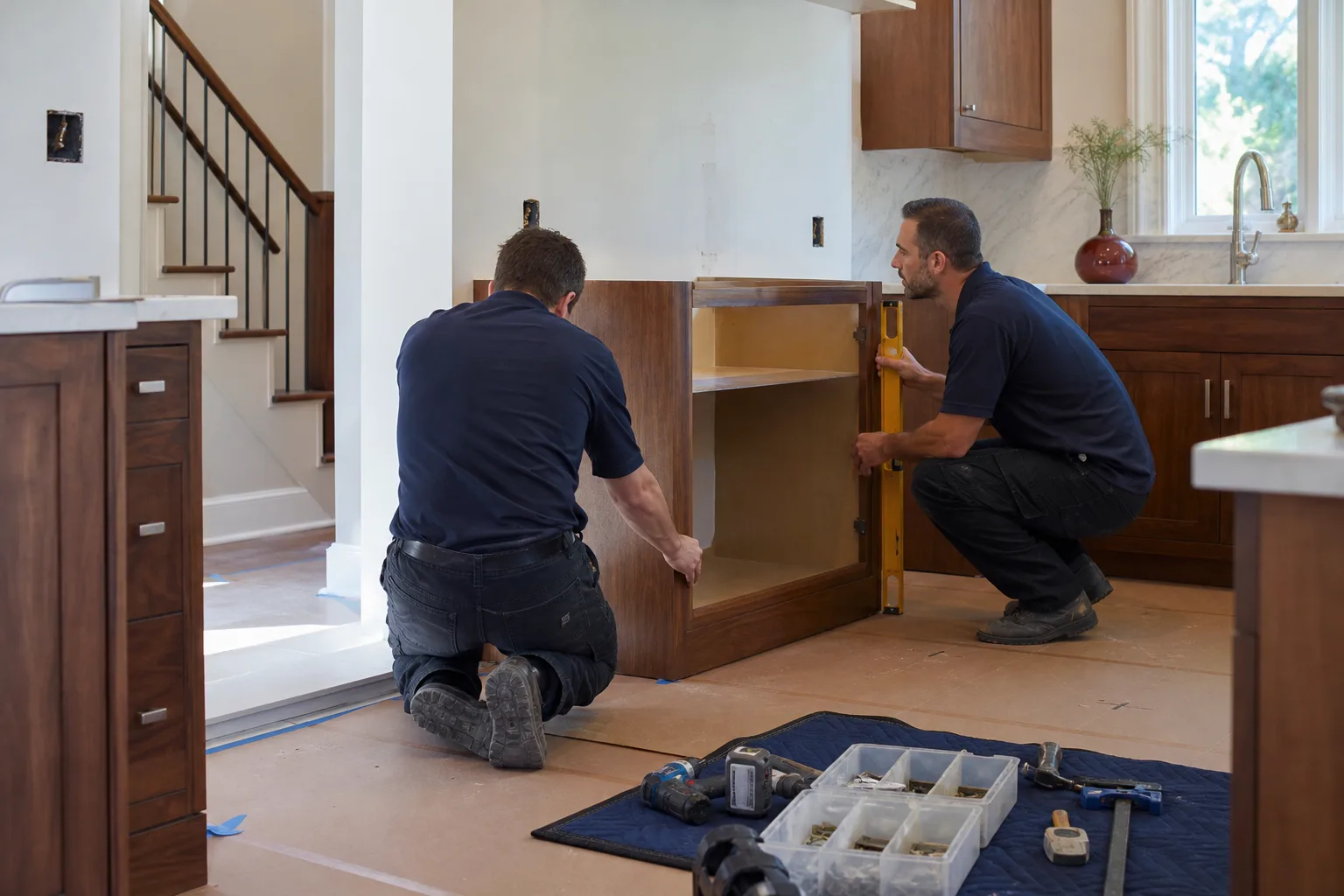
You can absolutely handle the diagnosis yourself. Open every cabinet door, run every drawer, run your hand along the countertop seams near the sink. What you find tells you what we need to replace. What we don’t recommend is pulling cabinet boxes out of modular wall cavities on your own. Plant Prefab walls are not stud-framed the way a conventional Los Angeles house is, so attaching a replacement cabinet or moving a wall cabinet means hitting the right structural anchors inside the module. Miss those and you have a cabinet pulling away from the wall. Electrical and plumbing inside modular cavities is also run differently than a stick-built kitchen, so when a job involves moving a wire or a supply line, call us.
Trevor Nash has a saying he repeats at almost every walkthrough: “Give you a number first, then pick up the tools.” That’s how we run Plant Prefab kitchen remodels in Los Angeles. Call (213) 277-6578 and we’ll come measure, write the quote, and tell you exactly what’s failing and what it costs to fix.
FAQs
Most Plant Prefab kitchens hold up for 8 – 12 years before cabinets or countertops begin to fail, and Los Angeles’s dry heat plus coastal humidity shortens that for homes within a few miles of the ocean. The modular structure lasts much longer; it’s the interior finishes that break down first. Call (213) 277-6578 and we’ll tell you what’s worth saving.
Some things yes, some no. Peeling edge banding can be re-applied, hinges and slides can be swapped, and soft-close hardware can be added without replacing cabinet boxes. Once the cabinet box itself is water-swollen or the framing inside the module has broken loose, repair becomes a losing game. We’ll tell you which one you have before we quote.
A cabinet-and-countertop swap on a Plant Prefab kitchen usually takes 7 – 14 working days. If we’re moving plumbing, electrical, or opening the kitchen to another module, expect 3 – 6 weeks. We give you a written schedule with a defined arrival window before work starts, so you know exactly when we’re in your home.
We stock common replacement parts on the truck: full-extension drawer slides, soft-close hinges, cabinet hardware, and quartz countertop materials from Cambria and Silestone. We’re an independent Los Angeles remodeling company, not affiliated with Plant Prefab, so for factory-specific trim or specialized modular connectors, we source the closest match rather than a generic substitute. If it doesn’t fit, we don’t install it.
Written by Trevor Nash, Owner, Penhallow Remodeling Los Angeles at Penhallow Remodeling Los Angeles, serving Los Angeles and nearby areas.


