


Free written scope consultation - allowances, timeline, and change-order rules on paper before a single trade is scheduled
Tuff Shed Driveway & Pavers: The Los Angeles Owner’s Guide
We match, source, and install Tuff Shed-compatible driveway and paver systems, including the concrete runners and paver bases many Los Angeles owners use to level and support their shed. A typical Tuff Shed driveway or paver pad installation in Los Angeles runs $4,130 – $12,980 for a paver setup or $5,310 – $14,160 for a concrete pour, depending on square footage, site prep, and whether we’re pulling out failed material first. If your Tuff Shed is sitting on cracked pavers, sinking concrete runners, or a base that’s washed out from the last storm, you’ve found the right page. Most owners notice the problem when the shed door starts sticking, or when water pools against the floor joists after a heavy rain. The driveway or paver pad under a Tuff Shed isn’t just a pad, it’s what keeps the building level, dry, and off the dirt. When it fails, the shed fails with it.
We’re an independent Los Angeles service provider, not affiliated with Tuff Shed, but we work on these structures regularly and know exactly how their footprint behaves on Southern California soil. Trevor Nash grew up in the Crenshaw district watching his uncle patch and re-frame the bungalows nearby, and that’s where our approach comes from: give you a number first, then pick up the tools.
Which Tuff Shed Models This Applies To
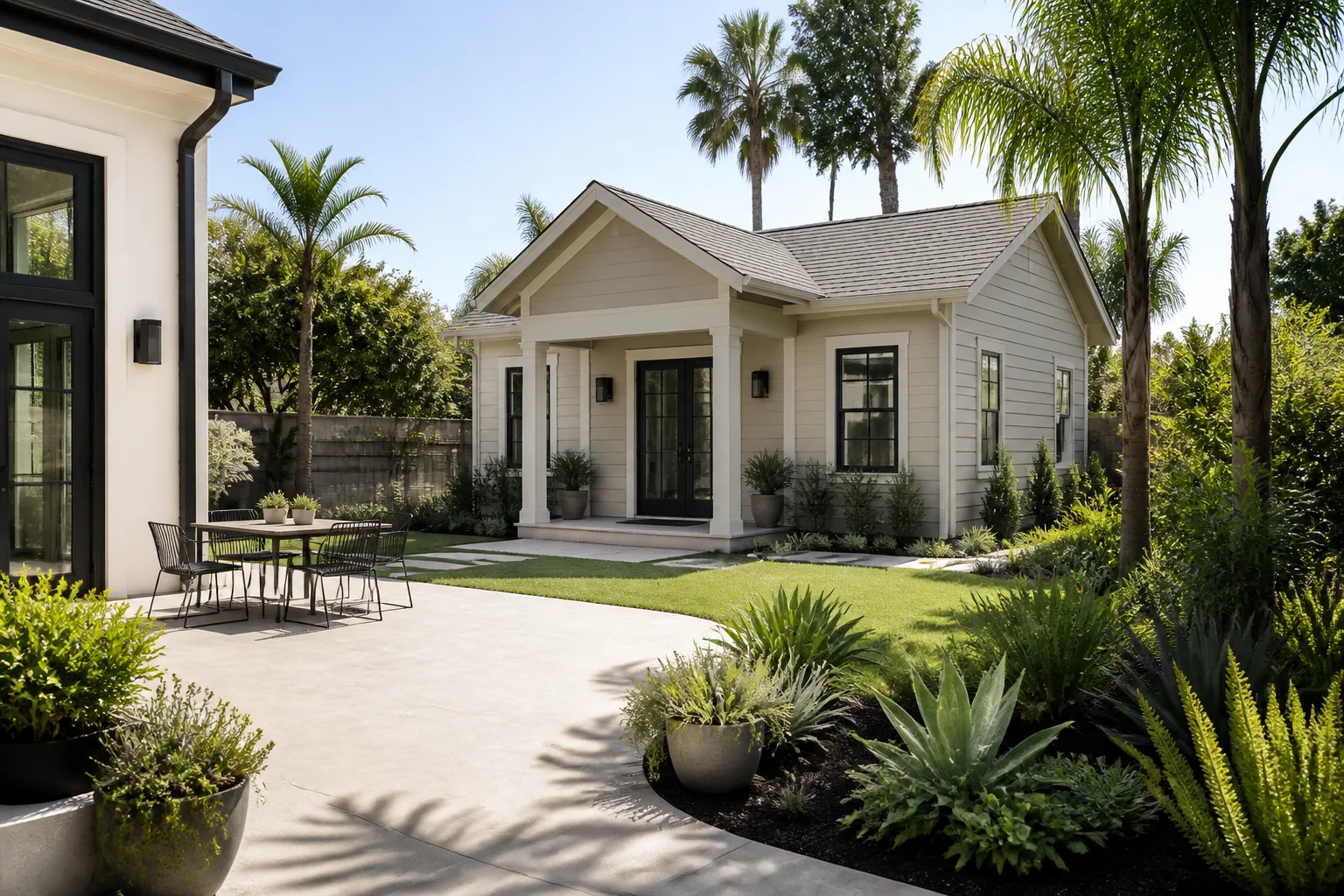
If you have a Tuff Shed on a driveway strip or a dedicated paver pad, your setup falls into one of a few common footprints. Tuff Shed’s standard models, including the Premier Ranch, Premier Pro, and Tall Barn lines, sit on engineered floor systems that expect a level, well-drained base. In Los Angeles, we most often see this with the 8×10 through 12×16 series, where owners poured a concrete runner or laid pavers themselves and found the base shifting six months later. The good news: the part we’re actually replacing or installing here, driveway material and pavers, doesn’t require a Tuff Shed serial match. The compatibility question is about what’s under and around your shed, not the shed chassis itself.
OEM versus aftermarket for driveway and paver systems is different from hardware parts. Tuff Shed doesn’t manufacture pavers or poured concrete. What you’re choosing is a material and a method. We typically install Belgard and Unilock pavers for Tuff Shed bases in Los Angeles because those lines hold up to the thermal cycling we get between the San Fernando Valley heat and the marine layer moisure that rolls through the Basin. For concrete, we suggest a 3,500 PSI mix with fiber reinforcement and proper expansion joints. The gotcha most Los Angeles homeowners miss: a Tuff Shed pad needs to extend 6 to 12 inches beyond the shed’s drip line on all sides, or water wicks back under the floor joists and rots them from below. We’ve pulled up enough rotten Tuff Shed floor plates in Encino and Sherman Oaks to tell you this is one of the most common failures we see, and it all starts with an undersized pad.
Styles & brands we work with







Signs Your Tuff Shed Driveway & Pavers Is Failing
Here’s what to look for before you call us. I’ll give you the symptom and the likely cause, so you know what you’re looking at when you walk the property.
- Sinking corner or visible slab drop on one end: The base material underneath, usually decomposed granite or sand, has settled or washed out. This happens constantly on Los Angeles hillside lots after heavy rain, and it tilts the shed enough to bind the doors.
- Paver gaps widening or pavers cracking along the shed’s drip line: Water runs off the roof, hits the edge of the pad, and erodes the bedding sand. The pavers lose support and crack under the shed’s weight, especially where the floor joists rest on the edge course.
- Water pooling against the shed’s bottom plate or floor joists: The concrete or paver surface doesn’t pitch away from the building. A proper Tuff Shed pad needs at least a 1% slope, about a quarter-inch per foot, running away from the structure.
- Shed doors suddenly stick or won’t latch square: The frame has shifted as the pad moved. This isn’t always a hardware problem: it’s often a base problem. You can adjust hinges, but if the pad keeps moving, the door keeps sticking.
- Weeds or grass pushing up through paver joints near the shed walls: No geotextile fabric was laid under the base, or the joint sand never got polymeric treatment. Weeds put pressure on pavers, pavers drift, and the pad loses its flat carrying surface.
See the difference
 Before
 After
After Before
 After
After Before
 After
AfterReplacement Cost & What’s Included
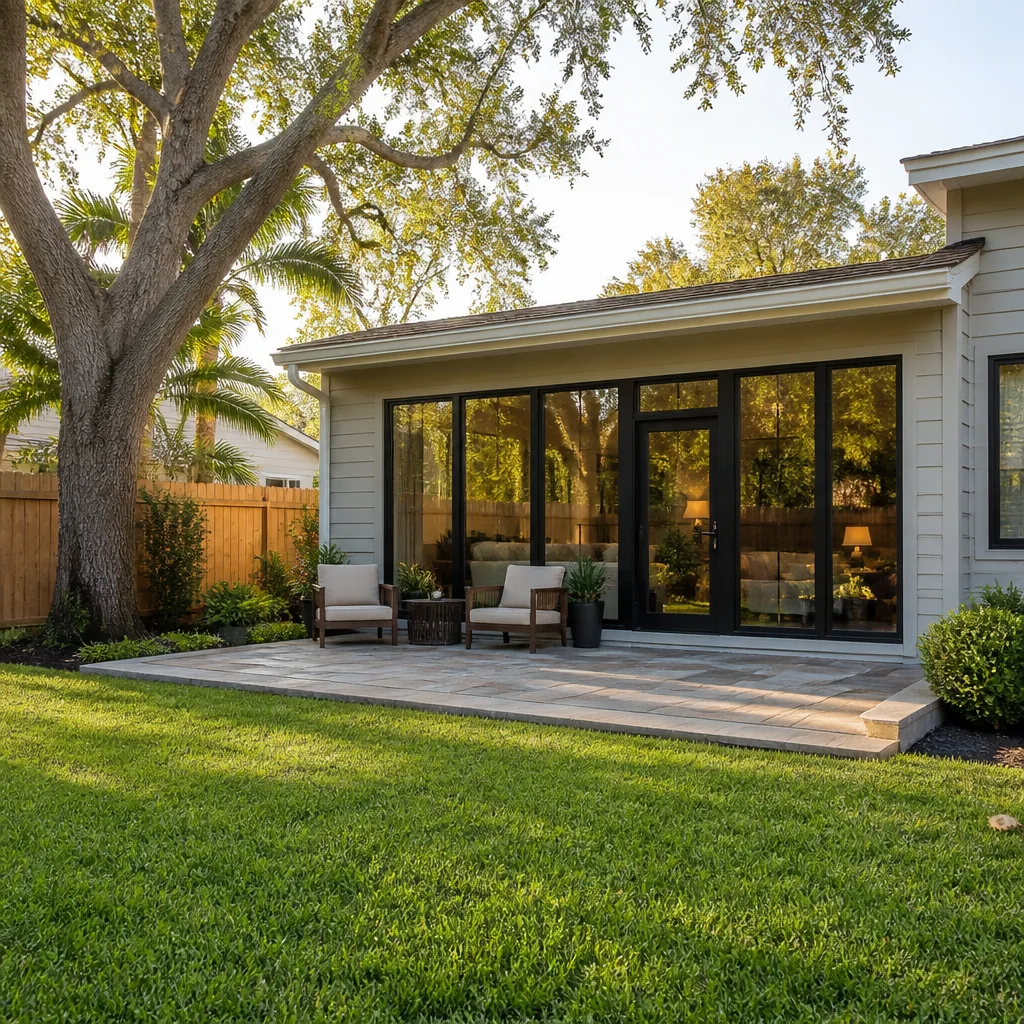
For a Tuff Shed driveway or paver pad in Los Angeles, you’re looking at $4,130 – $12,980 for paver installation and $5,310 – $14,160 for a poured concrete pad. The spread is driven by three things: square footage, whether we’re tearing out and hauling away a failed pad first, and whether the site needs regrading or retaining. A small 8×10 paver pad on flat ground in the Valley lands at the lower end. A 12×16 on a hillside in Silver Lake or Echo Park, where we have to cut into slope and build a retaining edge, goes higher.
Every quote includes full site prep: clearing, base compaction, geotextile fabric where the soil calls for it, and drainage grading. What you get from us, and this is the Penhallow standard from 2004, is a written price before any work starts. The number on day one is the number on the invoice. If the pad fails inside a year due to our workmanship, our 365-Day Done Right Promise brings a crew back at no charge. That’s in writing, on every project.
DIY or Call Us?
If the pad is failing, the honest split is this: you can safely check the basics yourself, but the repair is not a weekend project. You can check the slope with a 4-foot level and a quarter-inch shim. You can check for obvious paver drift or concrete cracking. You can look at whether the pad extends far enough past the drip line. What you shouldn’t do, and what we see go wrong regularly, is attempt a base repair without addressing drainage. In Los Angeles, our freeze-thaw cycle isn’t the issue, it’s heavy rain on hillside lots and expansive clay soil that moves more than most people expect. Lay new pavers on a base that still drains poorly, and you’ll get the same failure in a year. Concrete work on this scale means mixer trucks, base lifts compacted in 4-inch layers, and cure times. Call us at (213) 277-6578 and we’ll come look at the actual pad and give you a written number. Estimates are free.
FAQs
A properly installed concrete pad in Los Angeles should last 25 to 40 years, and a good paver pad 20 to 30, provided the base compacts correctly and drainage slopes away from the shed. What shortens lifespan here is water, especially runoff from the shed roof undermining edge courses. Call (213) 277-6578 if you’re seeing signs early, and we’ll tell you honestly whether it’s a repair or a replacement.
Yes, in many cases we can lift and re-set a section of pavers, re-compact the base, and re-sand the joints without tearing out the entire pad. We’ll only recommend that when the underlying base is still sound. If the base has washed out or the pad wasn’t built with fabric underneath, a partial fix buys time but doesn’t stop the problem. Call (213) 277-6578 and we’ll assess it on site, free.
Most Los Angeles Tuff Shed pad installations run 2 to 4 days from start to cured, with pavers usable sooner than poured concrete, which needs a 7-day cure before placing a heavy shed on it. We give you a defined arrival window before we start, so you’re not waiting on a vague “sometime this week.” Call (213) 277-6578 to schedule a free estimate and get a written timeline.
We stock standard Belgard and Unilock paver lines at our Los Angeles supplier and order specialty colors to the job, so you’re not stuck coordinating freight or dealing with pallets in your driveway. We also work with the other material brands we install across the company, including KraftMaid and Cambria, when a Tuff Shed job overlaps with a larger home remodel. Call (213) 277-6578 for a free estimate and we’ll price the exact materials for your pad.
Written by Trevor Nash, Owner, Penhallow Remodeling Los Angeles at Penhallow Remodeling Los Angeles, serving Los Angeles and nearby areas.


