

Free written scope consultation - allowances, timeline, and change-order rules on paper before a single trade is scheduled
Sakrete Kitchen Remodeling: The Los Angeles Owner’s Guide
If you’ve got a Sakrete product anchoring your kitchen remodel and something’s failed, you need a contractor who knows exactly what you’re working with. Sakrete is primarily a concrete and mortar brand, and in kitchen remodeling it shows up most often as floor leveler under tile, mortar beds under kitchen islands, or cement board for backsplash substrate. When that layer fails, you’re looking at cracked tile, hollow-sounding floors, or grout that keeps popping out no matter how many times you re-grout. Penhallow Remodeling Los Angeles fixes Sakrete-based kitchen failures, and a typical Sakrete kitchen remodel repair or redo in Los Angeles runs $16,520 – $53,100 depending on scope. Most owners discover the problem the hard way: a tile cracks six months after install, and the contractor who poured the floor leveler won’t return calls.
Here’s what’s happening under your tile, what it costs to fix right, and how we handle it. If you’d rather talk it through now, call (213) 277-6578 and ask for Trevor Nash. We’ll walk the floor with you before you spend a dime.
Which Sakrete Products This Applies To

Sakrete makes several products that end up in Los Angeles kitchens, and each fails a little differently. The most common is Sakrete Self-Leveling Underlayment, often poured over plywood subfloor before tile goes down. It comes in 50-lb bags, mixes thin, and sets fast. When the substrate underneath flexes, when the mix was too wet on pour day, or when the original installer skipped primer, that underlayment cracks and transmits the failure straight up through your tile. The second is Sakrete Sand Mix, or topping mix, used as a dry-pack mortar bed under kitchen islands and occasionally under stone countertops. The third is Sakrete Type S Mortar Mix, used when someone builds a brick veneer or masonry accent wall in a kitchen or sets a hearth for a range.
The part you need matched is less “a model number” and more “what was poured under your tile.” If you’ve got a leftover bag, the lot code printed on the side tells us the plant and date, but the real diagnostic is in the failure pattern: hollow spots along edges mean debonding, spider cracks across the center usually mean a flexing substrate. We’ll identify what’s actually failed before we tell you what it costs to fix. One Los Angeles-specific note: older homes in Silver Lake, Echo Park, and West Adams frequently have dimensional lumber subfloors from the 1930s and 1940s. Engineered cementitious underlayments like Sakrete’s do not play well with that kind of deflection, and a proper fix often means adding a layer of plywood before re-pouring. That’s a detail a generic contractor misses and your cracked tile doesn’t.
We also work with KraftMaid and Cambria products when the remodel extends beyond the failed substrate, and we stock Silestone-compatible setting materials for countertop repair work.
Styles & brands we work with







Signs Your Sakrete Kitchen Floor or Substrate Is Failing
- Hollow-sounding tile when you tap it. This is the earliest warning sign. It means the tile has debonded from the Sakrete underlayment underneath. The bond failed at the interface, usually from missing primer or a dusty surface on pour day. Tap with a broom handle across your kitchen floor. A dull thud is fine; a hollow “tock” is not.
- Cracks running in a straight line across multiple tiles. Tile cracks that follow a line across the room almost always point to a structural joint in the subfloor moving underneath the Sakrete layer. The underlayment wasn’t the failure point so much as the victim. Fixing this means addressing the movement source before you re-level anything.
- Grout keeps crumbling in the same areas. Grout doesn’t fail on its own. When it keeps cracking in the same spots after you repair it, the tile assembly underneath is flexing, compressing, or shifting. The grout is just the canary. The Sakrete bed beneath has likely lost its integrity.
- Uneven spots you can feel through your shoes. A self-leveler is supposed to be exactly that: level. Low spots that develop over time suggest the underlayment has broken down, compressed, or settled into voids. This is more common in Los Angeles kitchens with crawl spaces, where seasonal moisture swings make the subfloor move.
- A kitchen island that rocks slightly. If your island doesn’t sit solid and flat, check whether the mortar bed underneath has cracked or crumbled. Sakrete sand mix under island bases can deteriorate when waterproofing wasn’t installed at the slab edge, especially in kitchens on a raised foundation.
See the difference
 Before
 After
After Before
 After
After Before
 After
AfterReplacement Cost & What’s Included
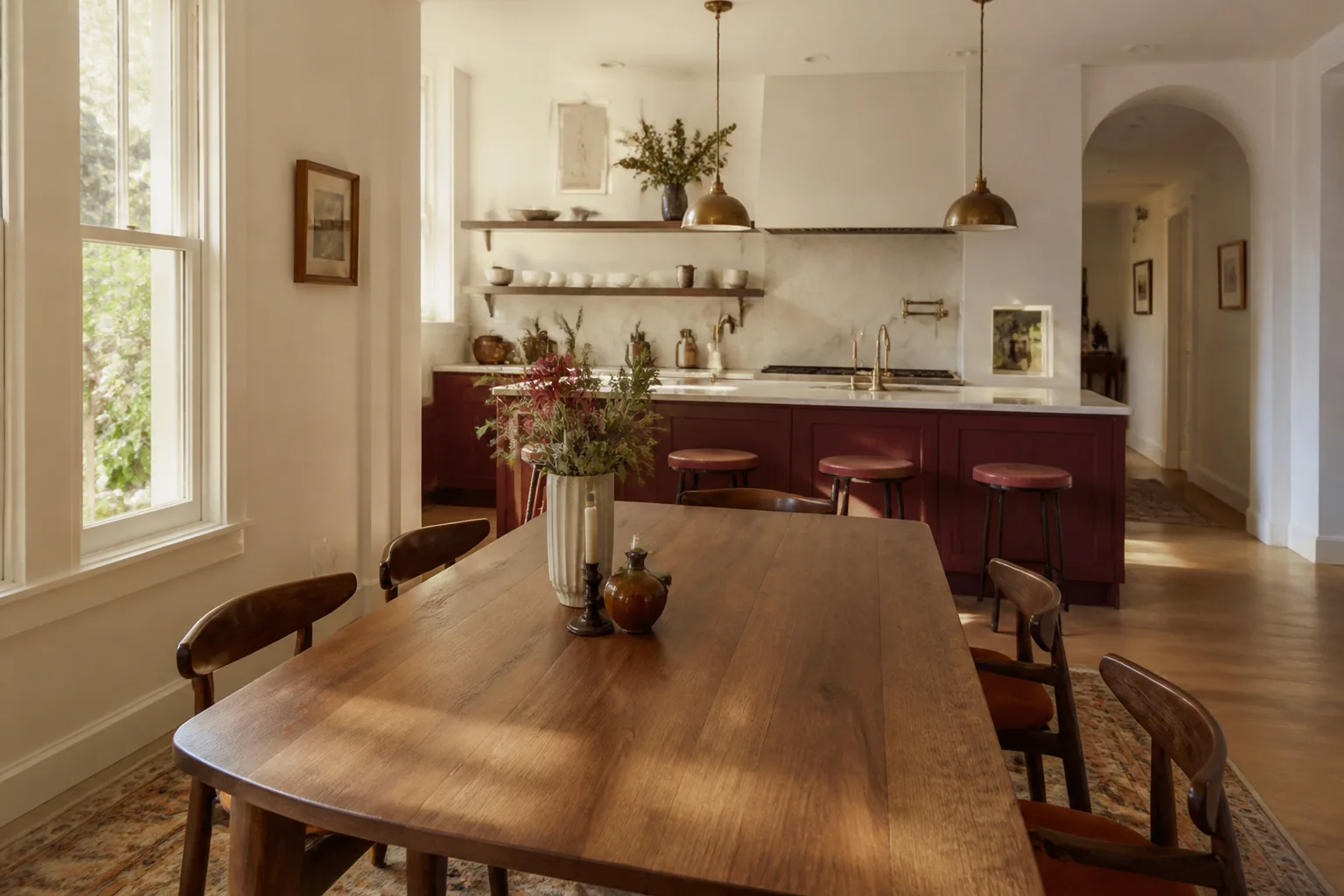
A Sakrete-related kitchen repair in Los Angeles typically falls between $16,520 and $53,100. Before that number means anything, here’s how it breaks down. A full kitchen remodel with new cabinets, counters, tile, and substrate work at the lower end means a compact galley kitchen with a simple layout and mid-grade finishes. The $53,100 end is a larger kitchen where we’re pulling up floors, re-pouring leveler across a big footprint, rebuilding an island base, and installing higher-end materials from brands like Cambria or Silestone.
On a smaller repair, like removing failed tile and re-pouring a Sakrete floor leveler in a modest Los Angeles kitchen, you’re looking at roughly $10,620 – $23,600. Countertop substrate repair, island re-setting, or a backsplash tear-out and redo lands between $945 and $7,670 depending on square footage and what’s underneath. Every price is written down before we pull the first tile. You get a line-item breakdown, a fixed number, and a written guarantee on the work itself.
The guarantee is the part that matters. Our 365-Day Done Right Promise means if the repair fails inside a year, we come back and fix it at no charge. No service call fee, no re-inspection charge, no back-and-forth. It’s in writing on every Sakrete repair we do in Los Angeles.
DIY or Call Us?
You can diagnose, but you shouldn’t pour. Grabbing a nickel and tapping your tile to find hollow spots is a smart first step. Checking for visible cracks along grout lines, looking for uneven thresholds, and noting which areas flex when you step near them is all useful. That tells us where to look.
Pouring Sakrete self-leveling underlayment yourself is where it goes wrong. Getting the water ratio right, priming the surface, mixing fast enough, and working before the set window closes takes reps. We’ve torn out DIY pours in Los Angeles kitchens more times than we can count. A bad pour is harder to fix than the original problem, because now we’re grinding out your underlayment before we can start over. If you’ve got a failed Sakrete floor or bed, call (213) 277-6578. We’ll come look at it and tell you honestly whether it’s a patch job or a full re-pour before any work starts.
FAQs
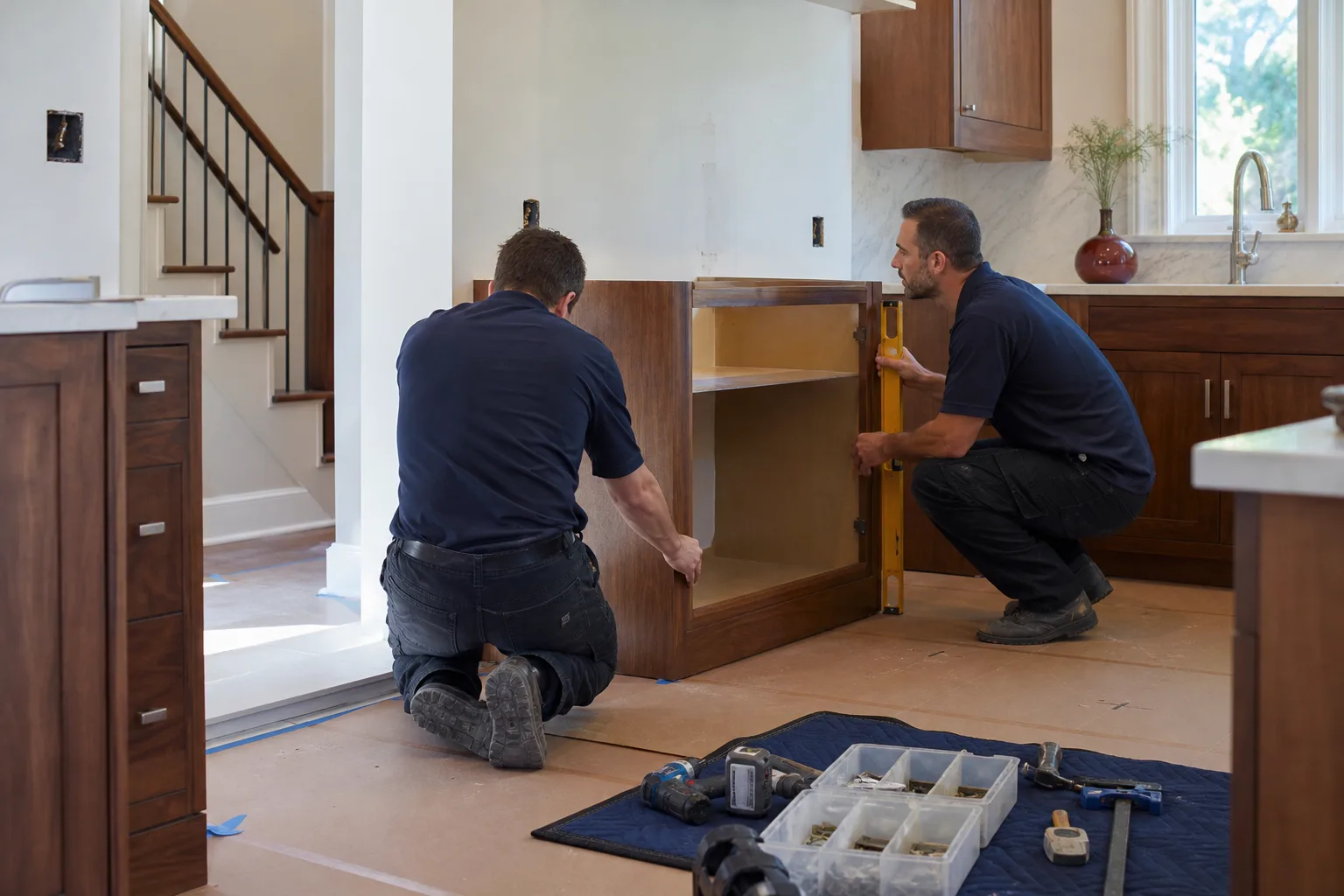
Sakrete underlayment should last 20 to 30 years in a Los Angeles kitchen, provided the substrate underneath is solid, the original installer primed it correctly, and it’s not exposed to water. Failures we see are almost always installation issues, not the product itself. Call (213) 277-6578 and we’ll tell you which one applies in your kitchen.
Sometimes, but only when the crack is isolated and the surrounding tile is still bonded. If there’s hollow-sounding tile nearby or the crack tracks across multiple tiles, patching will fail again within a year. We’ll give you our honest read during the free estimate visit.
Most smaller Sakrete floor repairs in Los Angeles take two to three days. That includes demo, subfloor prep, re-pour, and letting the underlayment cure before tile goes back down. Larger kitchen remodels with substrate work run two to six weeks depending on scope. You’ll get a real arrival window in writing before we start.
We don’t stock raw Sakrete bags on the truck, but we have them available from local Los Angeles suppliers same day. We use Sakrete products when the job calls for them and match existing installations when the work is a repair. We also carry setting materials compatible with KraftMaid, Cambria, and Silestone installations when the project extends past the floor.
Penhallow Remodeling Los Angeles is an independent remodeling contractor serving Los Angeles homeowners. We are not affiliated with Sakrete, but we’ve worked with their products in kitchens across the city, from Mid-Wilshire to Los Feliz to the Valley. Sakrete is a trusted name in concrete and mortar products, and we match our repair work to their product specifications.
Written by Trevor Nash, Owner, Penhallow Remodeling Los Angeles, serving Los Angeles and nearby areas.


