


Free written scope consultation - allowances, timeline, and change-order rules on paper before a single trade is scheduled
Ameristar Home Additions & ADU: The Los Angeles Owner’s Guide
If you’re searching for Ameristar-compatible home additions and ADU work in Los Angeles, here’s the direct answer: we plan, permit, and build home additions and accessory dwelling units that integrate with existing Ameristar-framed homes, and full projects in Los Angeles typically run $53,100 – $153,400 for additions and $106,200 – $259,600 for ADUs. The part most owners call us about isn’t a single component though, it’s the framing and connection points where an addition ties into the original Ameristar structure. What usually happens is the homeowner notices uneven settling at the seam, a roofline dip where old meets new, or drywall cracking along the transition wall. That seam is where most of these projects live or die, and it’s the first thing we inspect.
Before we go further: Penhallow Remodeling Los Angeles is an independent general contractor. We’re not affiliated with Ameristar, but we’ve built enough additions onto Ameristar-framed homes across Los Angeles to know exactly how their framing, plate heights, and foundation specs interact with new construction.
Which Ameristar Models This Applies To
Ameristar’s presence in Los Angeles is less about a single product line and more about the framing packages and prefabricated wall systems used in thousands of single-family homes built here between the late 1980s and mid-2000s. If your home has Ameristar framing, you’ll typically see their stamp on the bottom chord of roof trusses or on the top plate inside the attic. Look for an ink stamp rather than a sticker. Stickers peel off. Stamps survive.
The compatibility gotcha most owners don’t know: Ameristar homes in Los Angeles were commonly built with a specific exterior sheathing thickness and stud spacing, often 16-inch on center with 2×4 exterior walls in older models, and 2×6 in later builds. If your addition is drawn up assuming 2×6 walls and your home has 2×4 framing, the transition detail changes, the insulation continuity changes, and the roofline tie-in changes. We verify the actual framing before we ever draw a line.
For OEM versus aftermarket: Ameristar doesn’t sell “parts” for additions the way a manufacturer sells replacement panels. What you’re really buying is the lumber package, the sheathing, the connectors, and the labor. We source from the same distributors that supply custom home builders in Los Angeles, all rated for seismic requirements under current California code. In LA’s market, the materials matter less than how they’re tied in. We use Simpson Strong-Tie connectors at every transition point, and we spec shear wall where the city requires it.
Styles & brands we work with







Signs Your Ameristar Home Addition or ADU Is Failing
If you’re living with an existing addition that’s showing its age, here’s what we actually see on Ameristar-framed homes in Los Angeles:
- Diagonal drywall cracks at the old-to-new transition. Differential settling between the original foundation and the addition’s foundation. Los Angeles has expansive clay soil in many neighborhoods, and the ground moves more than people expect. The crack runs at a 45-degree angle because the two structures are moving at different rates.
- A visible dip in the roofline where the addition ties in. This usually means the original roof framing didn’t get proper bearing when the addition went up, or the transition flashing failed and water has been working on the framing. We see this most in additions built without a permit.
- Doors that stick seasonally or a floor that slopes toward the addition seam. The addition’s slab or pier system is settling. In coastal Los Angeles neighborhoods like Playa del Rey or the Marina, it’s usually a slab-on-grade issue with sandy soil. In the Valley, it’s often expansive clay.
- Gaps opening between the baseboard and the floor along the transition wall. The two structures are literally pulling apart. Small gaps are normal in a house that breathes. A gap wider than a quarter inch that grows seasonally is not.
- Water staining inside the seam closet or along the ceiling at the transition. Failed flashing where the old roof meets the new roof. By the time the stain shows, the sheathing underneath usually needs replacement too.
See the difference
 Before
 After
After Before
 After
After Before
 After
AfterReplacement Cost & What’s Included
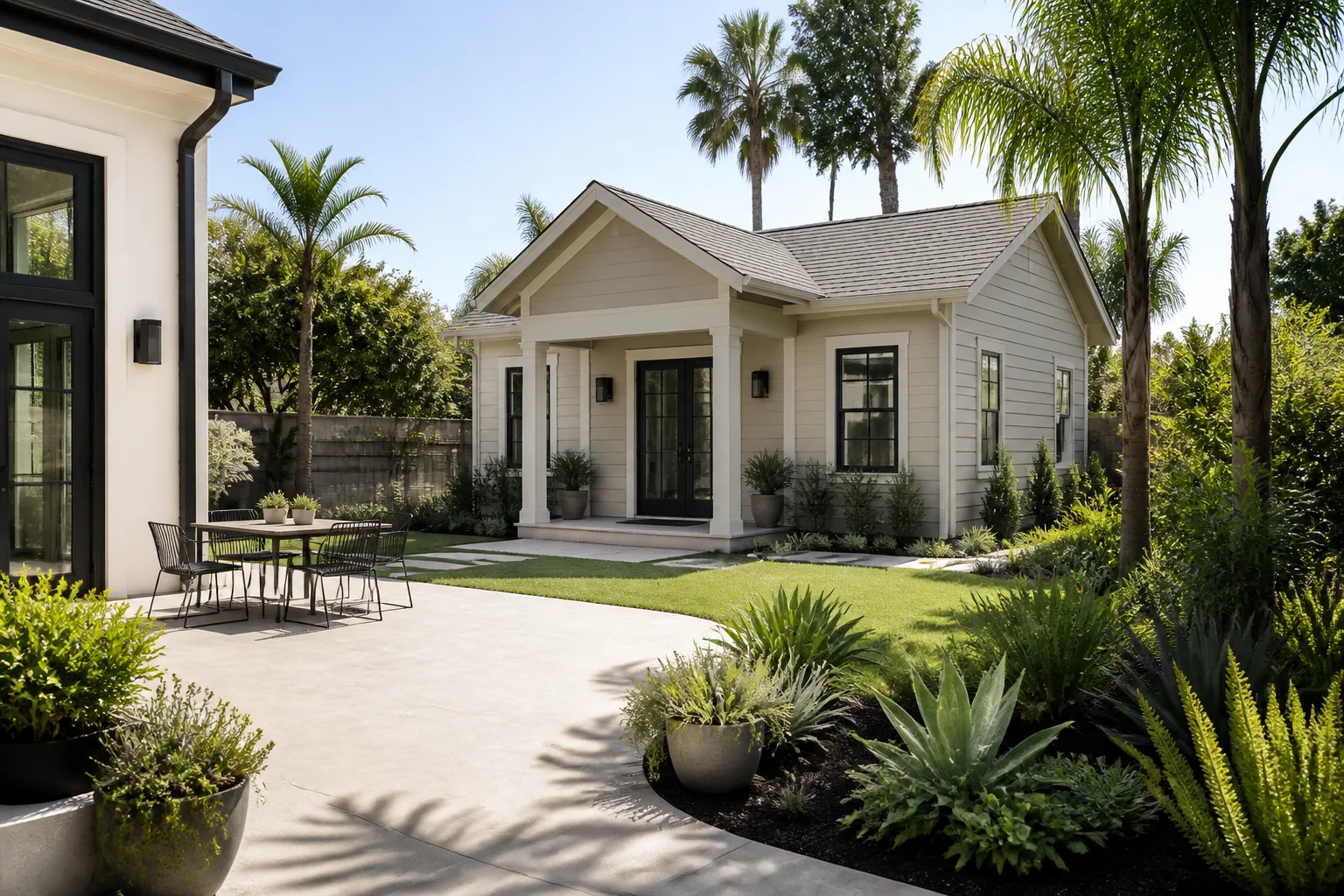
In Los Angeles, a full home addition typically runs $53,100 – $153,400 depending on square footage, foundation type, roof line, and interior finish level. ADU construction runs $106,200 – $259,600 for a detached unit with kitchen and bath. The wide range is real, and it’s driven almost entirely by four things: foundation work, roof tie-ins, kitchen and bath count, and whether the city requires upgrades to the existing home’s electrical service.
Here’s what we include in a written price, because in Los Angeles a verbal estimate is a guess:
- Plans and structural engineering. We work with licensed engineers who understand LA’s seismic requirements, and we pull permits through LADBS. You’ll have a set of stamped plans before we ever break ground.
- Foundation and framing, including the transition tie-in to your Ameristar structure. This is the line item that separates a good addition from one that cracks again in three years.
- Roofing and flashing at the transition seam. We use the same underlayment and tile or shingle spec as your existing roof so the seam sheds water properly.
- Interior finishes to drywall-ready, paint-ready, or turnkey. The price changes accordingly. We give you a written number for each level so you decide before we start.
Every project includes our 365-Day Done Right Promise. If something fails inside that first year, we come back and make it right at no charge. That’s in writing on every project, alongside the written price. We also name our material brands, so if we’re installing Cambria quartz in the ADU kitchen or Kohler fixtures in the bath, you’ll see it in the line items. Those products carry their own warranties, layered on top of ours.
DIY or Call Us?
If what you have is a hairline crack at the transition and you want to monitor it, you can absolutely do that. Mark the ends of the crack with painter’s tape and a date. Check it every month. If it doesn’t move in a year, it’s cosmetic, and you can have it patched and retextured anytime.
What you shouldn’t do is attempt any structural work on a failing addition seam yourself. The danger is real: a compromised roof tie-in or an improperly shored wall can fail catastrophically during construction, and in a seismic zone like Los Angeles, you’re also gambling with code compliance. We’ve walked into projects where a homeowner started pulling down drywall at the seam and found the original addition had never been properly tied to the Ameristar framing at all. No permit, no engineering, just nails and hope. In one case in Westchester, the addition roof was resting on the original eave with nothing but a 2×6 on flat. That’s a teardown, not a repair.
If you suspect your addition is compromised, call (213) 277-6578. We’ll come look, tell you what’s actually wrong and what it costs to fix, and give you a written number before any work starts. Give you a number first, then pick up the tools.
FAQs
How long should a home addition or ADU last in Los Angeles?
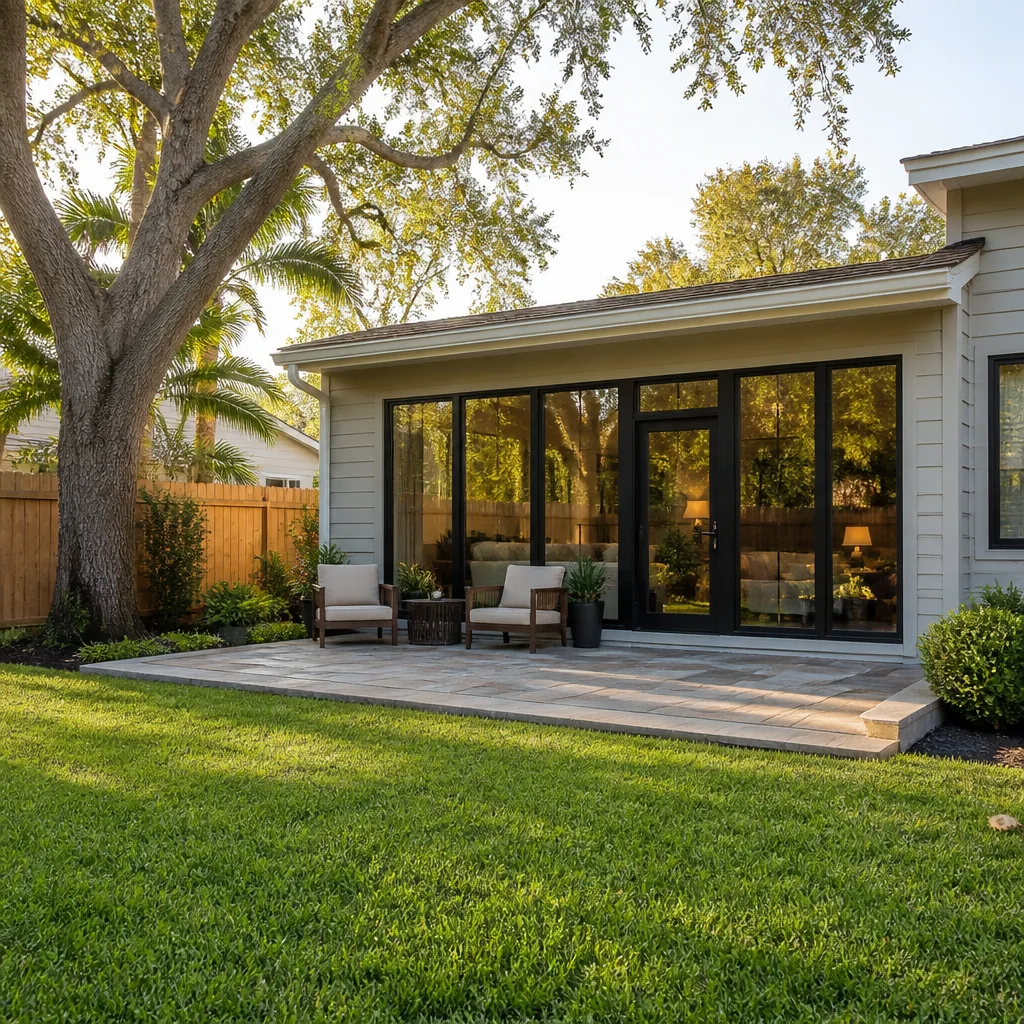
A properly permitted and built addition should last the life of the home, typically 50 to 80 years for the structure itself. Los Angeles weather is relatively kind to framing, since we don’t get long freeze-thaw cycles or heavy snow load, but the Sun Belt sun tears up roofing and flashing faster than most climates, and expansive soil in the Valley and seismic movement everywhere will eventually test any transition seam. The trim, roofing, and waterproofing at the seam will need attention every 15 to 20 years even on a well-built addition.
Can you repair a failing addition seam instead of rebuilding it?
Yes, in many cases the seam can be repaired rather than rebuilt. If the framing behind the drywall is sound and the issue is settling, waterproofing, or a failed tie-in, we can stitch the two structures back together with engineered connectors, re-flash the roof transition, and repair the cosmetic damage. If the original work was unpermitted or the framing has rot or termite damage, the repair scope grows. Call (213) 277-6578 and we’ll tell you what you actually have, because right now you’re guessing.
How long does an addition or ADU project take in Los Angeles?
A standard addition runs four to seven months from permit submittal to final inspection. An ADU runs five to nine months. The wildcard is LADBS review time, which varies by office and plan complexity. We sequence the work so the transition tie-in happens early, the roof is dried in before any finishes go in, and you never have a hole in your home open longer than necessary.
Do you handle everything from plans to permits?
Yes. We handle the architectural drawings, structural engineering, LADBS permit submittal, the inspections, and the build. You don’t have to chase anyone at the city, and you don’t have to coordinate between an architect, an engineer, and a framer who all blame each other when a permit gets returned for correction. That coordination is exactly where projects stall, and it’s the biggest reason we keep it in-house. Call (213) 277-6578 for a free estimate and a written number before anything starts.
If you’ve got an Ameristar-framed home in Los Angeles and you’re planning an addition or ADU, or you’ve got an existing one that’s cracking, settling, or leaking, give us a call at (213) 277-6578. We’ll walk the property, tell you honestly what you’re working with, and hand you a written price before you have to commit to anything. That’s how we’ve done it on every project since the Kingswell standard was set back in 2004, and it’s how we’ll do it on yours.
Written by Trevor Nash, Owner, Penhallow Remodeling Los Angeles at Penhallow Remodeling Los Angeles, serving Los Angeles and nearby areas.


