


Free written scope consultation - allowances, timeline, and change-order rules on paper before a single trade is scheduled
Caesarstone Bathroom Remodeling: The Los Angeles Owner’s Guide
A full Caesarstone bathroom remodel in Los Angeles typically runs $10,620 – $33,040, and most of that number is driven by the vanity configuration, shower scope, and how much of the existing waterproofing needs to be redone before new Caesarstone surfaces go in. The most common failure point we see isn’t the Caesarstone itself, it’s the substrate behind it or the silicone joint at the backsplash that finally gave way after years of moisture, hard water, and the occasional earthquake shift. Homeowners usually call us when they spot a hairline crack running from the faucet cutout, a seam that’s separated, or tile that’s started pulling away from the vanity top edge.
We’re an independent Los Angeles remodeling contractor. We install and work with Caesarstone surfaces every month, but we’re not affiliated with Caesarstone’s corporate warranty program. That matters because our 365-Day Done Right Promise covers the installation work, the waterproofing, and the labor, while Caesarstone’s own warranty covers the slab itself. Two layers of protection, from two different parties.
Which Caesarstone Models This Applies To

Caesarstone’s bathroom portfolio spans a few distinct collections, and the compatibility details change between them. The most common lines we install in Los Angeles bathrooms are the Classico and Supernatural series, though we also see the Metropolitan and Outdoors collections when a client is doing a wet room or a vanity that wraps to an exterior wall.
Each slab carries a lot number and a color code (like 4141 for the classic “Pure White” or 6338 for “Woodlands”) etched on the back side, and matching an existing Caesarstone surface means reading that code, not just eyeballing the color. The Supernatural series runs 20mm thick (about 3/4″), while most Classico bathroom installs use the 13mm thickness (about 1/2″) with a built-up edge. That matters for two reasons: replacement edge profiles won’t match correctly if the thickness is wrong, and salvageable slabs can’t just be swapped between the two without reworking the cabinet support underneath.
For the OEM-versus-aftermarket question: Caesarstone doesn’t make “parts” in the traditional sense like a faucet cartridge or a hinge. What fails is almost always the installation assembly around the slab, the seam adhesive, the undermount sink clips, or the substrate. For those, we use the same professional-grade materials Caesarstone fabricators specify, color-matched seam adhesive and marine-grade plywood substrate. An aftermarket sealant from a big-box store will crack and yellow within a year in an LA bathroom that sees daily shower humidity.
Styles & brands we work with







Signs Your Caesarstone Bathroom Remodeling Is Failing
- A hairline crack radiating from the faucet or drain cutout. This typically means the cutout edges weren’t properly radiused during fabrication, or the slab is settling because the cabinet underneath has shifted. Los Angeles’ freeze-thaw cycles aren’t the culprit here (we don’t get them), but seasonal humidity swings and minor seismic settling are.
- A dark line or discoloration running along the seam. The seam adhesive has begun to fail, which lets water, soap scum, and bacteria wick under the surface. Once that line forms, it doesn’t self-seal, and scrubbing makes it worse.
- The backsplash pulling away from the wall or the vanity top. This is almost always substrate movement behind the slab, often from original drywall that was never replaced with cement board. The Caesarstone itself is perfectly intact, but the surface it’s sitting on is compromised.
- Caulk that cracks, peels, or turns black within weeks of reapplication. That’s a sign the underlying joint is moving too much for surface sealant to handle. Recaulking is a bandage, not a fix.
- A “bouncy” or soft spot when you press on the vanity deck around the sink rim. The plywood or MDF beneath the Caesarstone has absorbed moisture and lost structural integrity. Left alone, the slab will eventually crack right through the thin web of material around the sink bowl.
See the difference
 Before
 After
After Before
 After
After Before
 After
AfterReplacement Cost & What’s Included
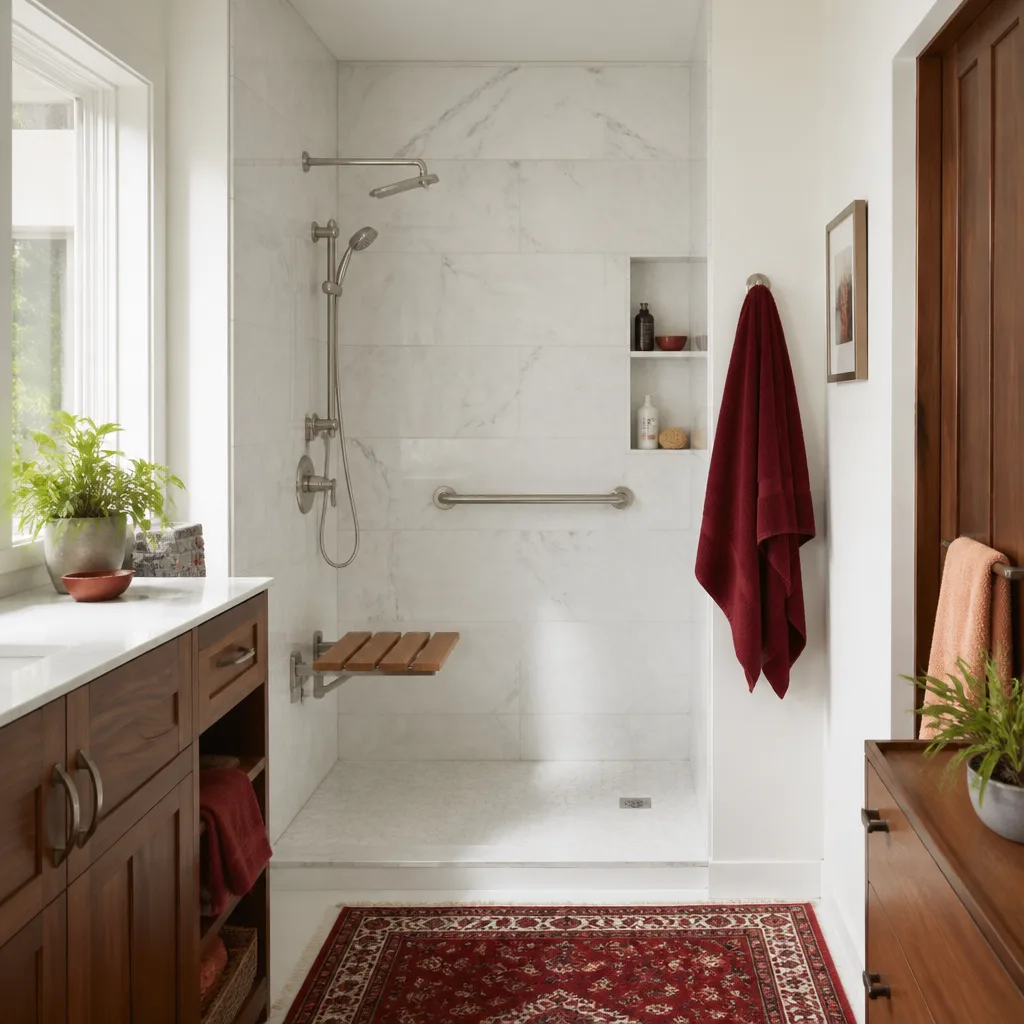
For Los Angeles homeowners, a Caesarstone-focused bathroom remodel breaks down into three pricing tiers. A small bathroom remodel (up to roughly 40 square feet, stock vanity, single-sink Caesarstone top) lands between $5,900 – $14,160. A full bathroom remodel with a new Caesarstone double-vanity top, new shower surround, new fixtures, and full waterproofing runs $10,620 – $33,040. If you’re replacing just the vanity top and the supporting substrate, it’s typically $945 – $3,540 in labor plus slab cost, depending on whether the slab is 13mm or 20mm and whether there’s an undermount sink to reset.
Every number we give is a written price, not a range we’ll revise after demo. The quote includes R&R (remove and replace) of the substrate, seam fabrication and color-matching if the new slab meets an existing stone run, sink clip resetting, plumbing disconnect and reconnect, and haul-away of the old material. Our warranty is in writing on every job: if the installation fails inside a year, we come back and make it right at no charge. That includes a free second visit if a seam separates or a crack forms in the installed work.
DIY or Call Us?
You can safely do three things yourself: read the color code off the back edge of your slab, take photos of the seam or crack from multiple angles, and shut off the angle stops under the sink if you see water getting past the vanity top. That’s the full DIY list for a failed Caesarstone vanity assembly in a Los Angeles bathroom.
What you shouldn’t do is pry up the slab, try to inject adhesive under a seam, or attempt to reset an undermount sink yourself. A Caesarstone vanity top for a standard 60″ double vanity weighs between 180 and 250 pounds depending on thickness and overhang. When a slab that heavy shifts or drops, it takes fingers, cabinet faces, and tile with it. And if the failure is the substrate, no amount of surface repair fixes what’s happening underneath. Call us at (213) 277-6578 and we’ll send a technician to measure, identify the failure point, and give you a written number before anyone picks up a tool. Give you a number first, then pick up the tools.
FAQs
With correct substrate and professional installation, a Caesarstone bathroom surface should last 15 – 25 years in a Los Angeles home, though southern-facing bathrooms with direct sun on the slab will show surface wear faster. The slab itself rarely “wears out”; it’s the installation assembly around it that fails first, usually between years 8 and 15. Call us at (213) 277-6578 if your seam or substrate is failing before the surface itself should be.
Yes, if the crack is in the slab and hasn’t propagated through the full thickness, a fabricator can fill and reinforce it with color-matched adhesive, but the repair is cosmetic, not structural, and it will remain faintly visible. If the crack was caused by substrate failure, replacement is the only real fix. For an exact assessment and a written price, call (213) 277-6578, estimates are free.
A full Caesarstone bathroom remodel in Los Angeles takes 2 – 4 weeks from demo to final walkthrough. A vanity top replacement with substrate work is typically 3 – 5 working days. Either way you’ll get a defined arrival window and a written timeline before work starts.
We don’t stock full Caesarstone slabs at our shop, but our Los Angeles fabricators maintain standing inventory of the most common Classico and Supernatural colors, so many jobs start within one week of your written approval. Custom or special-order colors add two to four weeks. We also work with KraftMaid, Cambria, and Silestone for vanities and surfaces when a client wants to compare.
Written by Trevor Nash, Owner, Penhallow Remodeling Los Angeles at Penhallow Remodeling Los Angeles, serving Los Angeles and nearby areas.


