

Free written scope consultation - allowances, timeline, and change-order rules on paper before a single trade is scheduled
Fast, Reliable Kitchen Remodeling Across Koreatown
A full kitchen remodel in Koreatown typically runs $14,000 – $45,000, with small kitchens landing between $9,000 and $20,000 depending on building type, cabinet line, and what’s behind the drywall. We work throughout the neighborhood, from the mid-rise co-ops along Wilshire Boulevard to the pre-1980 wood-frame apartments tucked off Normandie and Western. Koreatown’s older buildings bring a specific set of challenges: soft-story retrofits, unreinforced masonry, post-tension slabs, and 60-year-old plumbing you won’t see until the walls come down. Trevor Nash and our crews plan for those realities before demo day, which is why our written price includes an allowance for the surprises we know this neighborhood throws at a remodel. Call (213) 277-6578 for an estimate tailored to your building.
Why Penhallow Remodeling Los Angeles Is Koreatown’s Preferred Kitchen Remodeling Company
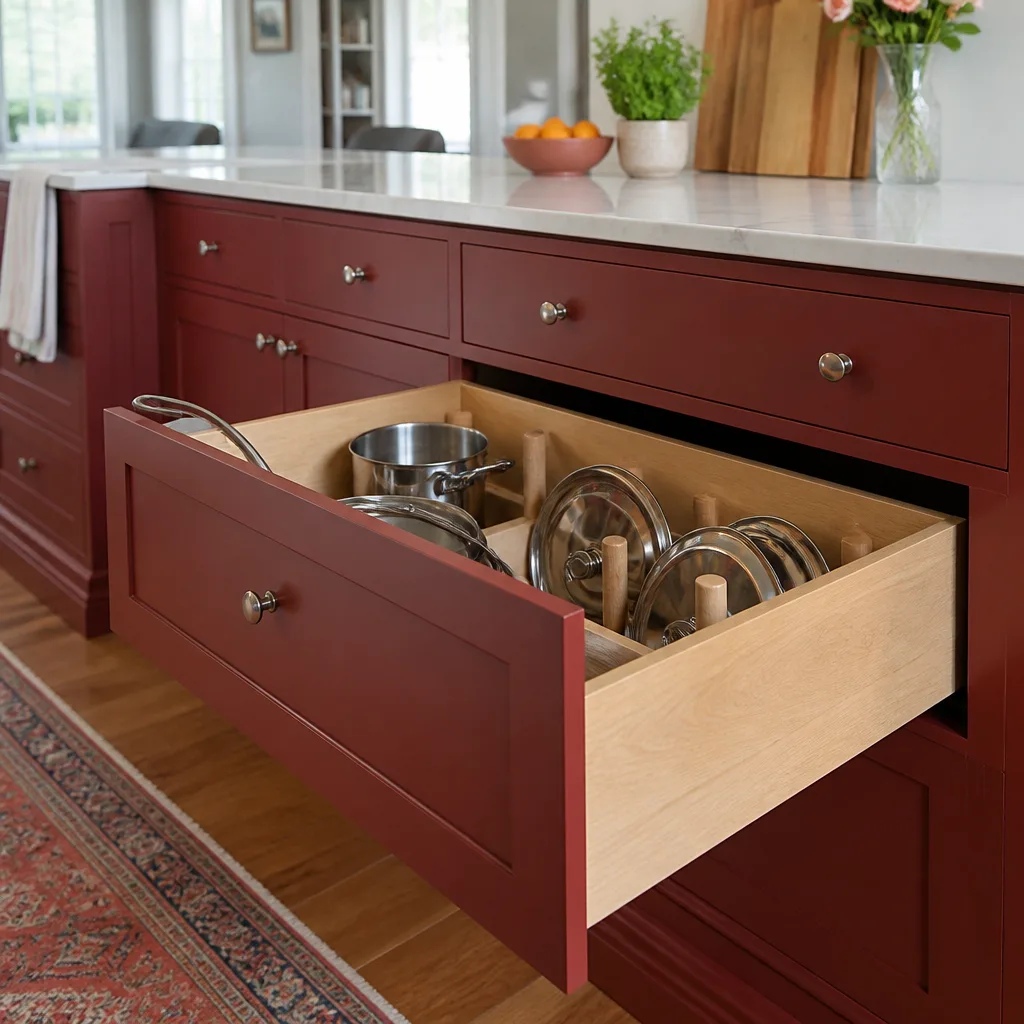
Most of our Koreatown clients have been through it before. A contractor gave them a verbal number, showed up late, and then the invoice looked nothing like the original conversation. Our approach is different because we put the price in writing before any work starts, and that number doesn’t move unless you approve a change order in writing first. It’s the Kingswell standard, and it’s been that way since 2004.
We know the difference between a 1930s brick courtyard building near 8th Street and a 1970s wood-frame fourplex off Vermont. That matters because the permit process, structural requirements, and even the cabinet layouts change depending on what kind of building you’re in. Our crews have opened enough Koreatown walls to recognize knob-and-tube wiring, notched load-bearing headers, and corroded galvanized supply lines before they become a five-figure surprise. The 365-Day Done Right Promise backs every job in writing. If something isn’t done right, we return and fix it at no charge, no service call fee, no re-inspection fee.
You’ll also reach a live person when you call, any hour, whether it’s 2 p.m. on a Tuesday or 6 a.m. on a Sunday. No voicemail maze. Background-checked, uniformed technicians arrive in the window we gave you, and the job site is left cleaner than we found it.
Styles & brands we work with







Kitchen Remodeling Contractor in Koreatown
A Kitchen Remodeling Contractor in Koreatown has to handle what other neighborhoods never see: mandatory soft-story retrofits that extend into kitchen-bearing walls, concrete cutting in post-tension slabs for plumbing relocations, and working around Metro Purple Line construction when the building sits on Wilshire. This isn’t a simple cabinet swap in a newer single-family home. It’s opening up a 1950s mid-rise unit, confirming the retrofit status, and building your new kitchen without compromising the seismic work the city already required.
When you hire us, the first step is an inspection, not demolition. We check the electrical panel, the plumbing rough-in, the header condition, and whether the soft-story retrofit extends into the walls we’ll be opening. That inspection drives the written price we hand you before work starts. A typical full remodel in this neighborhood runs $14,000 – $45,000, and we’ll show you exactly what that covers, line by line.
Structural & Seismic Coordination
Koreatown’s soft-story ordinance means many pre-1980 wood-frame buildings already have a retrofit framework in place, but that framework doesn’t always extend into interior kitchen walls. Once old plaster comes down, you may find steel columns and moment frames that affect cabinet depth, ceiling height, and load paths. We coordinate the kitchen scope with the existing seismic work instead of fighting it, so your layout survives inspection and your cabinets land where the drawings say they will.
Working in Mid-Rise & Mixed-Use Buildings
Plumbing relocations in mid-rise mixed-use construction often mean cutting through post-tension concrete. That’s a controlled process requiring X-ray scanning and engineering sign-off, and it’s one of the reasons a Koreatown kitchen remodel can cost more than a similar-sized project in a single-family neighborhood. We build that line item into the contract up front, not as a surprised “add” after the slab is open.
Kitchen Design in Koreatown
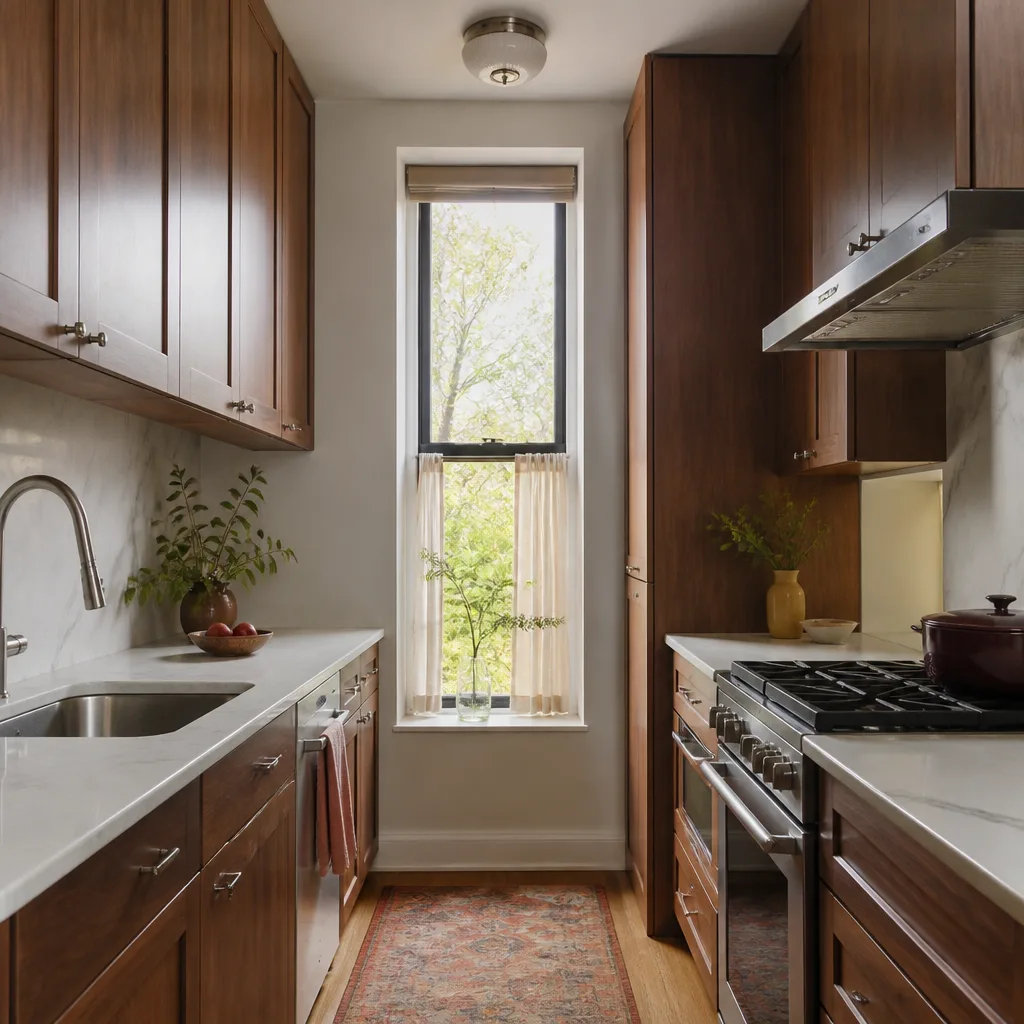
Kitchen Design in Koreatown usually starts with limitations: fixed column placements, shallow cavities in brick or concrete walls, ceiling heights that shift after a soft-story upgrade, and older units where the original galley layout was never updated for modern appliances. Working within those constraints is the difference between a kitchen that feels tight and one that actually functions for the way you cook.
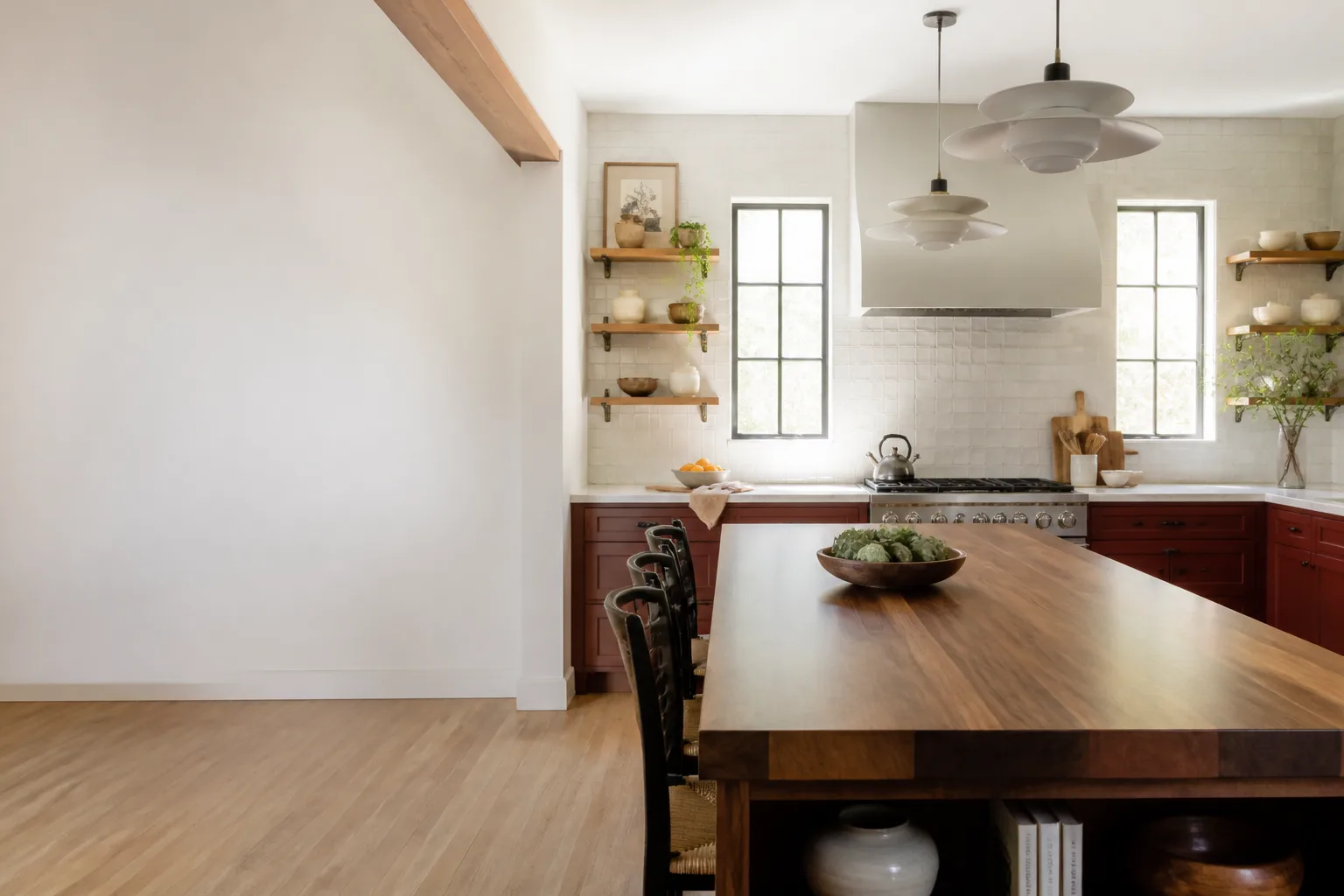
We design around the building. That means measuring the actual clearances after seismic work, not the original floor plan. It means choosing cabinet lines like KraftMaid and Wellborn that come in enough depth and height configurations to work with a ceiling that isn’t perfectly level. And it means specifying Cambria or Caesarstone quartz for counters that carry their own warranty alongside ours. A small or partial kitchen remodel in Koreatown runs $9,000 – $20,000; a full design-and-build, including layout work, cabinetry, countertops, and the rough-in upgrades a permit triggers, lands in the $14,000 – $45,000 range.
Design for Older Floor Plans
Most 1920s – 1960s Koreatown units have compact, U-shaped or galley kitchens that weren’t built for dishwashers, 36-inch ranges, or ventilation hoods. We rework those footprints without moving structural walls when possible, using island units where the floor plan allows and full-height cabinetry to recover vertical space the original design wasted. Where an island works, a custom island installation typically runs $3,000 – $10,000 including countertop material.
Material Selection That Fits the Building
You’ll see quartz from Silestone and Caesarstone, cabinetry from KraftMaid and Wellborn, and fixtures from Kohler and Moen. We specify these because they hold up in buildings where you might be dealing with more wall movement, higher humidity, or slab thermal shifts than a new-construction build would. The materials carry their own manufacturer warranties, which layer on top of our 365-Day Done Right Promise.
Trusted Brands We Service in Koreatown
We install and service cabinetry and countertops from brands Koreatown homeowners actually ask for: KraftMaid, Wellborn, Cambria, Silestone, Caesarstone, Kohler, Moen, and James Hardie where exterior scopes touch the kitchen. Because we keep a local supply chain through our Los Angeles office, lead times for these product lines run shorter than what a big-box or out-of-area contractor can offer. You’ll get a written lead time for materials in your contract, and we order the cabinets and countertop slabs as soon as the design is approved so demo isn’t sitting open for weeks.
See the difference
 Before
 After
After Before
 After
After Before
 After
AfterCommon Kitchen Remodeling Problems We See in Koreatown Homes
- Seismic retrofit conflicts with kitchen walls. The soft-story ordinance work done in one part of the building doesn’t always extend into kitchen-bearing walls. When we open those walls, we sometimes find headers that need reframing before cabinet installation can proceed.
- Knob-and-tube wiring in pre-1950 buildings. A 1940s brick building near Wilshire Place can still have active knob-and-tube circuits. Once a wall is open, the Electrical Code requires replacement, and that means a rewiring permit and an added line item we write into the contract as soon as we confirm the wiring.
- Plumbing relocations through post-tension slabs. Koreatown’s mid-rise mixed-use buildings commonly have post-tension concrete floors. Moving a sink or an island’s plumbing means X-raying the slab, avoiding the tension cables, and getting an engineer’s approval. We price this as a known cost, not a change-order surprise.
- Ceiling height mismatches after retrofits. When a soft-story retrofit added steel beams or lowered soffits, the original ceiling height in the kitchen may have changed. If we don’t verify post-retrofit clearances before setting cabinet heights, the new uppers won’t fit. We measure after the seismic work is confirmed, not before.
Pricing for Kitchen Remodeling in Koreatown, CA
Koreatown pricing reflects the building stock. A full kitchen remodel here runs $14,000 – $45,000. Small or partial remodels land at $9,000 – $20,000. Here’s the line-item breakdown we show homeowners during the estimate:
| Scope | Typical Range in Koreatown |
|---|---|
| Kitchen Remodel | $14,000 – $45,000 |
| Small Kitchen Remodel | $9,000 – $20,000 |
| Cabinet Installation | $4,000 – $13,000 |
| Countertop Installation | $2,000 – $6,500 |
| Kitchen Island Installation | $3,000 – $10,000 |
What moves the number: whether your building requires seismic-related structural work, whether the electrical is knob-and-tube, whether the slab is post-tension concrete, and which cabinet and countertop lines you choose. We cover all of that in the written estimate, including allowances for the conditions we expect in Koreatown’s older buildings. Call (213) 277-6578 to schedule your free estimate.
We Also Serve Cities Near Koreatown
Our Kitchen Remodeling team works throughout central Los Angeles, and we also serve homeowners in Los Angeles, Burbank, Santa Monica, and North Hollywood. If you’re in one of those cities and you’re planning a full Kitchen Remodeling in Koreatown but want to compare scopes, we’ll give you the same written price structure every time, no matter which neighborhood your building sits in.
Serving Koreatown, CA - Our Local Coverage Area
We’re based in the Koreatown area and know this community well. Use the map below to see our service coverage - if you’re nearby, we can almost certainly help.
FAQs About Kitchen Remodeling in Koreatown
If your building falls under Los Angeles’s soft-story ordinance and hasn’t completed its retrofit, the city may require the retrofit work to be underway or completed before you can pull a kitchen remodel permit, and the retrofit often extends into kitchen-bearing walls. We check your building’s retrofit status during the initial inspection and coordinate the kitchen scope with any required seismic work. Call (213) 277-6578 and we’ll check your building’s status as part of the free estimate.
Unreinforced masonry in Koreatown’s older brick and concrete buildings can’t support new cabinet anchors or relocated utilities without an engineer’s assessment, and in some cases it triggers a mandatory seismic upgrade under LA’s retrofit ordinances. We stop work, document what’s exposed, bring in an engineer when the condition warrants it, and hand you a written change order before anything else moves. The price is never invisible.
Yes. Mixed-use buildings along Wilshire often carry historic facade protections, Metro construction coordination requirements, and stricter structural review because of the soft-story and adaptive reuse ordinances that apply to Koreatown’s older commercial corridors. The permit can take longer and cost more than a single-family remodel. We pull permits for every job where they’re required, and we factor the timeline into your project schedule before work starts.
After a soft-story retrofit, steel moment frames, columns, and lowered soffits can change ceiling heights and wall depths in the kitchen, which means off-the-shelf cabinet runs may not fit. We verify post-retrofit clearances and specify KraftMaid or Wellborn cabinet lines in configurations that work around the steel. Cabinet installation in a post-retrofit Koreatown kitchen runs $4,000 – $13,000 depending on line and configuration.
Sometimes, but not always. A cabinet refacing or countertop replacement without opening walls usually won’t trigger electrical or structural upgrades. The moment you open a wall in an older Koreatown building, any non-compliant condition the inspector can see has to be addressed. That’s why we do a pre-demolition inspection, tell you what’s likely behind the wall based on the building’s era and construction type, and write allowances into your contract so you’re making decisions with real numbers, not guesses.
If you’re planning a kitchen remodel in Koreatown, call (213) 277-6578 to schedule your free estimate. We’ll walk the space, check the building conditions that matter, and put a written number in your hands before any work starts.
Written by Trevor Nash, Owner at Penhallow Remodeling Los Angeles.